Over the past several years, I’ve written numerous articles exploring the parallel nature of music and photography — and how the creative techniques I apply to one are often relevant to the other.
Distilled to the utmost purity, photography is simply a way to trigger an emotional response through visual stimulation, while music works through aural excitation. But curiously, in spite of this similarity, the expectations an audience places upon photographers and musicians couldn’t be more different.
To the general public, a good photograph is a good photograph — regardless of the photographer’s physical characteristics, personality, dress, manner or age. To that same public however, a good song is not just a good song — it’s an amalgamation of the musician’s appearance, personal style and aura.
No matter how good a musician is, the bulk of their audience likely comprises a single generation — with the musician’s relevance and popularity dictated by how closely they personify that generation’s definition of “cool.” A cult of personality surrounds musicians, and a listener’s emotional response to the actual music is inevitably filtered and distorted by their perception of the musician who performs it.
I believe this phenomenon occurs because sight is our dominant sense. Whatever we see influences whatever we hear, taste, feel or smell. Anything created to engage one of the non-sight senses is inevitably impacted substantially by what one sees while experiencing it. But if you create something (like photography) that directly targets someone’s visual sense, then any superfluous visual information matters little in comparison.

When we listen to music, we’re often engaged in some other activity — reading, writing, dining, socializing, etc. With music, there is ample sensory headroom remaining for additional stimuli, which means our enjoyment of it can be impacted substantially by our environment. For example, when people we admire engage with a particular type of music, we often choose to listen to the same music — meaning we allow far more than an auditory sense to dictate our listening choices. This “sensory headroom” is also one of the reasons people enjoy live music — it adds a visual element in which the appearance of the musician and the staging of the concert all filter and alter one’s involvement with the music. In contrast, when was the last time you bought a ticket to watch an artist paint a picture?
One of the ways musicians have maintained a visual connection with their audiences is through their choice of instrument. There are thousands of different musical instruments, the workings of which are often a mystery to the majority of people. Instruments have a certain mystique — even amongst other musicians. A trumpet virtuoso will likely become a ham-handed buffoon when handed a viola — yet both instruments can be used to play the identical tune. This plethora of instruments enables each musician to maintain a level of visual exclusivity that separates him or her from other musicians, and from the general public. If we watch someone extract fabulous sounds from an instrument that we, personally, have no idea how to play, it creates a certain allure — an element of “cool.”
Contrast this to photography. Sure, there are thousands of different camera models, but essentially they’re all minor variations of the same thing — a box with a lens and a button. Once you’ve taken a photo yourself, there’s nothing particularly exciting about watching someone else take a photo. Richard Avedon pushed a button, just like Henri Cartier-Bresson did, and just like Daido Moriyama does. Stylistically, their photos couldn’t be more different. But they all used essentially the same tool to create them. The fact one person’s tool was a medium format camera, another’s was a Leica rangefinder, and the third shoots with compact cameras makes no real difference. It’s tantamount to trying to draw a distinction between a pianist that plays a Steinway and one who plays a Yamaha — the subtle differences may impact the musician, but to the audience these instruments are one-and-the-same.
I never thought to dissect this distinction between the enjoyment of photography and the enjoyment of music until about a month ago, when I made my quasi-annual pilgrimage to the musical instrument and recording trade show, called NAMM. Previously, I had a much more knuckle-dragging, neanderthal-ish take on why good photography could stand alone, while music appreciation was inextricably tied to celebrity, trends and generational hipness. Photography fans, I postulated, were simply more “evolved.”
The fact that Robert Frank’s seminal 1959 album of photos (The Americans) remains one of the best selling photography monographs today is testament that good photography transcends generational cool. In contrast, how many youngsters seek out Charles Mingus’ equally-seminal 1959 album of music (Mingus Ah Um)? If you’re a young fan of modern photographers (regardless of genre) and you have a modest collection of monographs, you’ve probably got a copy of The Americans on your shelf. But if you’re a fan of Taylor Swift, Drake or Beyonce, you probably don’t have a copy of Miles Davis’ Kind of Blue on your iPhone.
So what happened at this years’ NAMM show? What transformed my barbaric “music fans are shallower” presumption into such cognitive enlightenment? Simple. I witnessed a performance that, based on my old theory, would have required me to admit that I, too, am shallow. And there’s no way I could let that happen…
NAMM attracts around 2000 exhibitors who display their musical instrument wares to over 100,000 attendees. Consequently, I see all manner of musicians playing all manner of instruments — cellos, trumpets, drums, organs, guitars, pianos, synthesizers, oboes, kotos, accordions, dulcimers, pipas, sitars, etc. Every one of these people seems eminently “cool” to me because, frankly, it’s cool to watch someone interact so expressively with objects of such exotic purpose.
But everything changed when I attended a lecture about using smart phones and tablets as musical instruments. It featured a performance by a world-renowned virtuoso keyboardist, jamming away on his iPad. Watching him play, I was certain I could never manage to articulate that iPad app with the dexterity, precision and feeling that he did. By definition, this should have made his performance seem “cool.” Yet it was one of the dullest and most uninspiring musical recitals I’d ever seen. Why? Because it was played on an iPad.
Watching someone play an iPad is visually no different than watching someone play Angry Birds. Or type a tweet. Or move funds between bank accounts. The end result may sound fantastic, but it’s a tedious thing to witness. I had no more interest in watching a virtuoso play an iPad instrument than I would have watching Josef Koudelka take a photo… and I dearly love Koudelka’s photos!
Technically, this should have thrilled me. A milestone had been reached! Finally, here was a case of music being produced solely for music’s sake! The point of a Koudelka photo isn’t to watch Koudelka take the photo — it’s to savour the end result. So shouldn’t the point of a musical performance be the music itself, and not the visual act of seeing it performed? Apparently not. Because I simply could not engage with it. And the reason I couldn’t was because of the way in which the music was being performed.
Tablets and smart phones are ridiculously common place. They are not purpose-built devices; they’re platforms. I’ve used one. You’ve used one. Roughly 7 billion of us own one or the other, or both. Those of us who don’t have likely witnessed scores of people who do. These are not objects of mystery, and the odds are good that you’ve (literally) bumped into someone using one on the street within the past 24 hours.
What do all these people do on all these devices? Who cares?! The point is, we all know that whatever we do on our devices, we do it because it’s easier and more convenient than doing it some other way. And so, when we see someone swipe out a musical performance on an iPad, it gives the illusion that this person is taking the easy way out — that they’re shortcutting the musical creation process. Would any of us want to go see Yo Yo Ma play if he was dragging his finger around on a cello app, as opposed to playing a real cello? Probably not. Even if he could obtain the same sonic result with the app, there’s something fundamentally uncool about it — as if Yo Yo Ma was no longer “special,” because he’s using the same device you just used to watch cat videos on YouTube.
And therein lies the problem. If you stick daggers into your iPad like Keith Emerson did with the keys on his organ, it’s not going to scream out in distorted anguish and bring 10,000 fans to their feet. It’s just going to quit working. You can’t play it with your teeth like Jimi Hendrix played guitar. You can’t even close your eyes and make dreamy “jam faces” while you play, because there’s no tactile feel to an iPad’s glass screen, meaning you need to constantly watch yourself play it.

So it was here, in this small conference room on the second floor of the Anaheim Convention Center, that I came to realize exactly how and why the appreciation of music can not exist wholly within the music itself.
And I further realized, having returned to writing music after my photography-centric hiatus, that it won’t be enough to simply stick my music up on the internet, and let it stand on its own merit. Music needs to be propped up in ways that photography doesn’t. If I want people to engage with my music to the same extent that they engage with my photography, I’m going to have to do more than just post it on the internet. I’m going to have to make the experience of listening to it seem cool. And somehow, I’m also going to have to make myself seem cool.
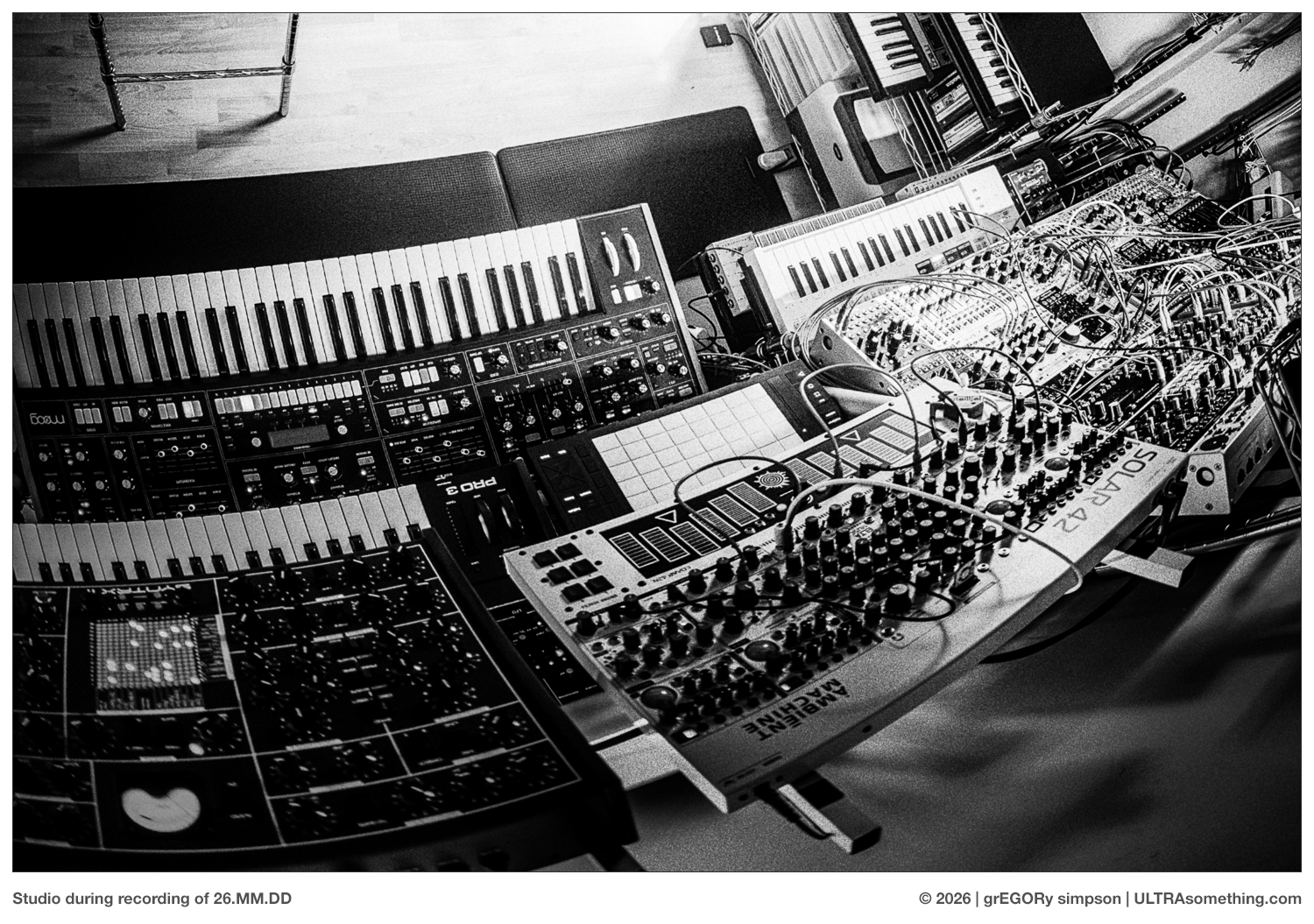
Alas, though I have now defined the task before me, I haven’t a clue how to approach its resolution. So if anyone knows how to make a middle-age man who plays a giant electromechanical instrument that looks remarkably like a 1940s telephone switchboard look “cool,” I’m all ears.
©2017 grEGORy simpson
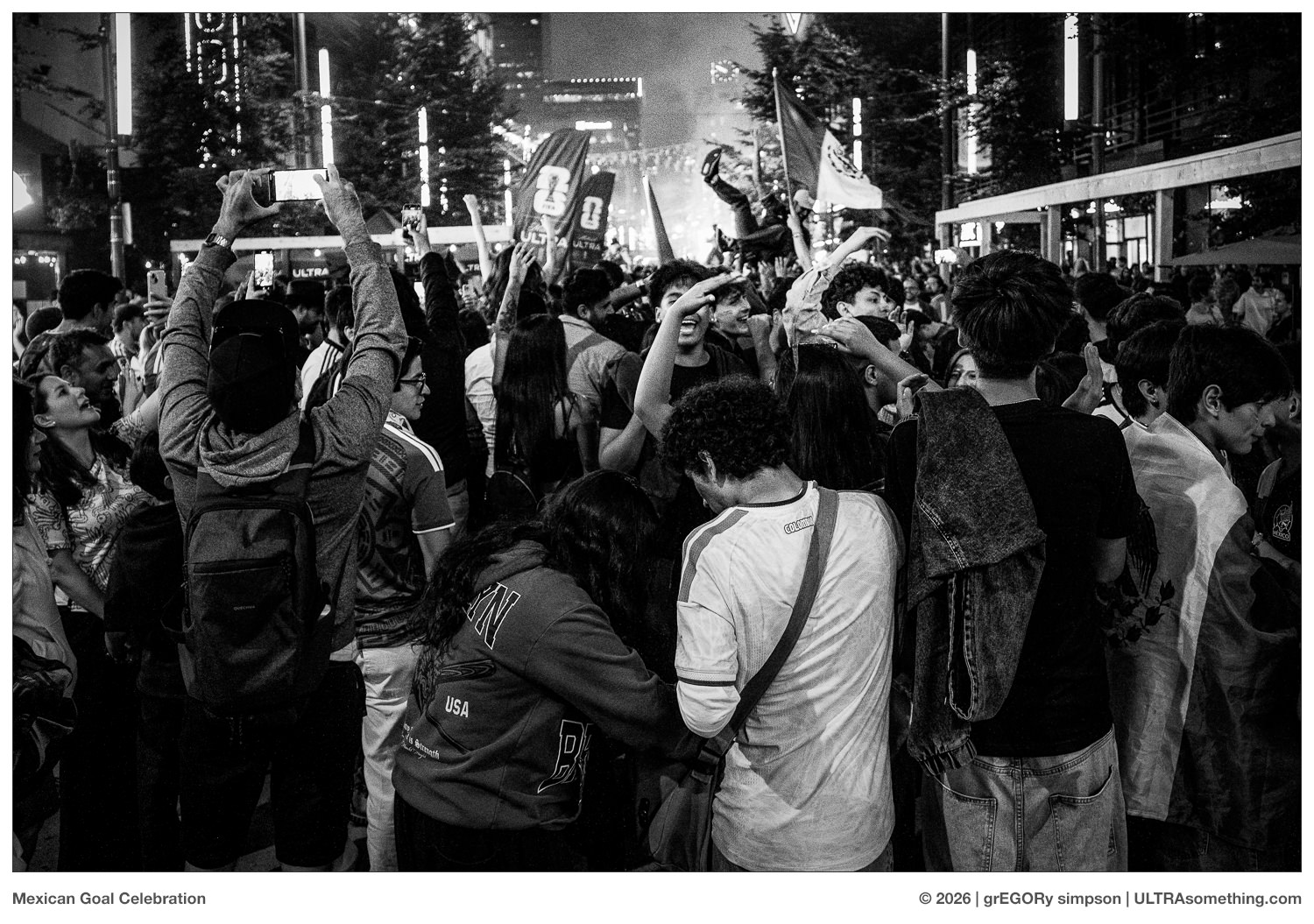
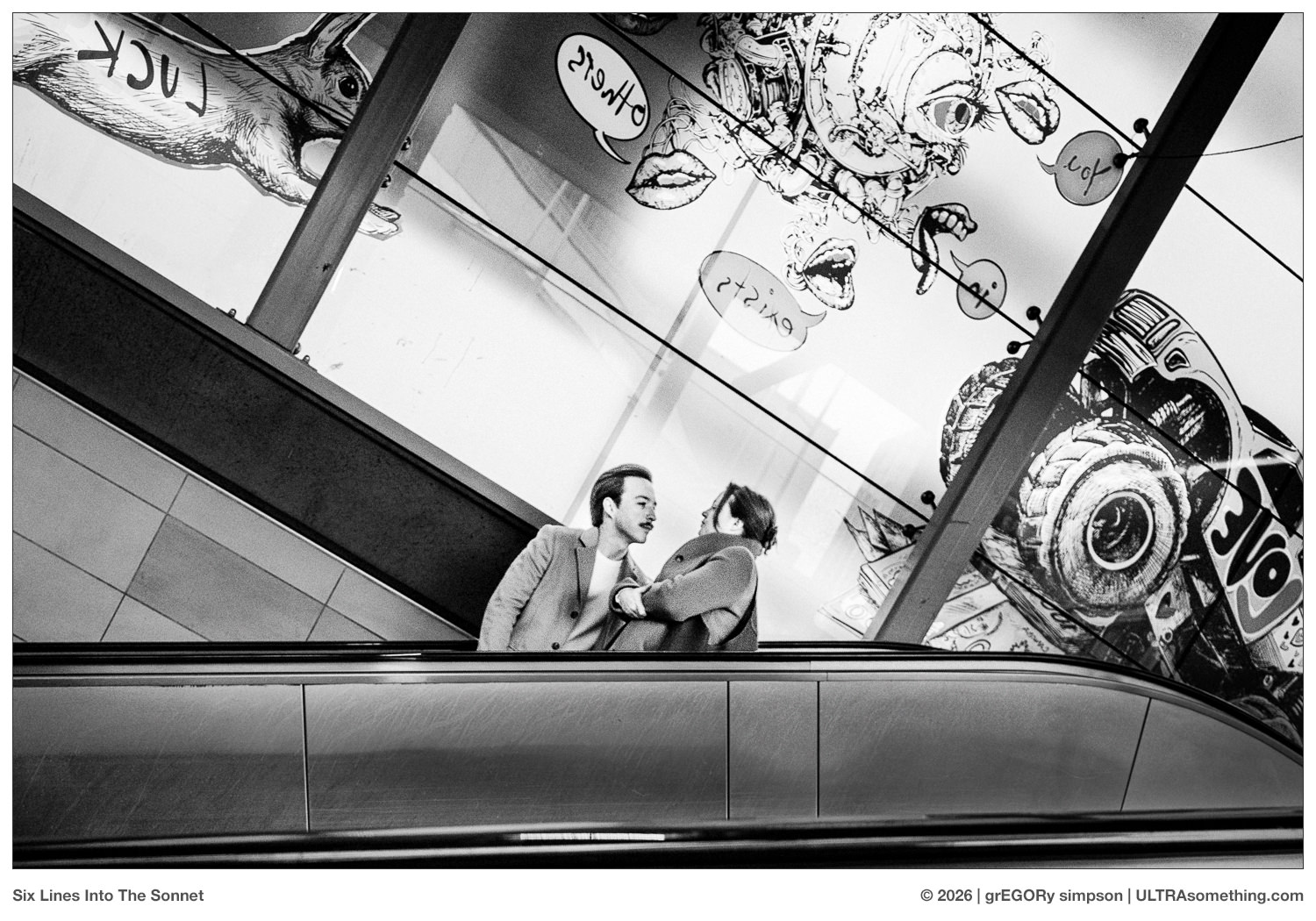
ABOUT THE PHOTOS:
“Death of the Cool” was photographed with a Leica IIIc and a Voigtlander 25mm f/4 Snapshot-Skopar lens on Tri-X at ISO 400, which I developed in Rodinal 1:50.
“Symbolism” and “The New Cool?” were both shot on a Leica M Monochrom (Type 246); the first employing a Voigtlander 50mm f/1.5 Nokton lens, and the second a Leica f/2 Summicron (version 4).
The title is obviously (to me anyway) a reference to Miles Davis’ 1957 album, “Birth of the Cool.” That which was born must eventually die…
REMINDER: If you find these photos enjoyable or the articles beneficial, please consider making a DONATION to this site’s continuing evolution. As you’ve likely realized, ULTRAsomething is not an aggregator site — serious time and effort go into developing the original content contained within these virtual walls.