There’s a new monkey in my house and he’s riding my back. Rodinal’s his name and film developing’s his game.
My reference to Rodinol as “new” is slightly inaccurate since it’s been a darkroom standard since the 19th century. It was one of the first products sold by AGFA, and it remained in AGFA’s catalog until a few years ago, when various corporate acquisitions, mergers and spin-offs spun Rodinal right into oblivion. Fortunately, AGFA’s 1891 patent has long expired, and a handful of other manufacturers are now bottling the stuff under all manner of alternative names.
So my new monkey isn’t really new — he’s just new to me. And his name isn’t really Rodinal, it’s “Blazinal.” But it’s all just semantics because, new or old, Rodinal or Blazinal, I’ve got a serious jones for the stuff.
Rodinal, for the edification of those who think “megapixels” when they think “cameras,” is a high-acutance film developer. Basically, this means it produces sharp negatives with pronounced micro-contrast, but at the expense of a very prominent and conspicuous grain. If that sounds like gibberish to those of you accustom to a CMOS-to-SD workflow, please partake in the following paragraph:
Film is coated with silver halide crystals, which are highly sensitive to light. Once the film is shot, any exposed crystals will turn black when dunked into a developer. Following development, the film is immersed in a fixer, which washes away all the unexposed silver halide leaving only the exposed, black crystals behind (thus creating a negative image). These crystals are what’s known as “grain.” Of course, nothing’s new under the sun so, like today’s photographers who obsess over minimizing digital sensor noise, film photographers were forever trying to reduce the visibility of those crystalline grains. That’s why, over the course of the 20th century, solvent-based developers (like Kodak D-76) supplanted the popularity of high-acutance developers (like Rodinal). Solvent developers contain agents that actually dissolve some of the blackened silver crystals, softening the “edge” effect of the little granular clumps and thus minimizing their appearance. These so-called “fine grain” developers produce a smoother image, but at the expense of sharpness and micro-contrast.

Flash forward to 2012. Thanks to an ill-advised experiment in false economy, I now find myself with numerous rolls of color medium format film — all frugally purchased long-ago from expired stock. But since my home is equipped only for black & white developing, I would actually need to send these negatives to a lab that had medium format C-41 processing capabilities — thus completely negating my rationale for pinching pennies on expired film. Since color rarely plays an important role in my photography, I decided to save some cash and develop those color negatives in black & white chemistry. I knew, if I dropped that color film into a 1:100 solution of Rodinal for 60 minutes, then I’d have a perfectly scannable B&W negative. So I picked up a bottle of Blazinal from my local camera shop, rolled up my sleeves and commandeered the kitchen sink in a bloodless coup.
Via a glitch in the internet’s time/space continuum, those early Rodinal experiments will appear in an article titled “A Derelict Memory Lane,” which was written prior to this article, but which will appear later in time.
Suffice to say that the experiment was a success. And, as a bonus, I now had a nice big jug of Rodinal to play around with. Truth be told, I was never all that happy with my current developer, Ilfotec DD-X. While it does seem well-suited to tabular grain films, like Ilford’s own Delta series, I usually prefer the traditional, organically-grained films like Tri-X. Back in my early (pre-digital) days, I often developed Tri-X with D-76, which I still prefer but which never achieved quite the look I wanted. Here, in the 21st century, I no longer shoot enough film to counteract the short shelf-life of an opened jug of D-76. So, with DD-X readily available and sporting respectable longevity, it became my developer by default. But what I wanted was grain. Yes, grain. If I want my photos to be polite, I’ll shoot digital. When I want peppery bits of impudence, I’ll opt for Tri-X. But, try as I might, I never could get a well-defined grain structure from either DD-X or D-76.
So, after finishing a recent roll of Tri-X, I dropped it in a 1:35 solution of that newly purchased Rodinal clone and followed the recipe outlined in The Massive Dev Chart’s iPhone app. The result? Exactly the type of negatives I’d been longing for: sharp and with a full (yet scannable) tonal range; high micro-contrast; and crunchy, beautiful grain. In short, Rodinal gives me exactly that ineffable tonality and graininess that I want from film.


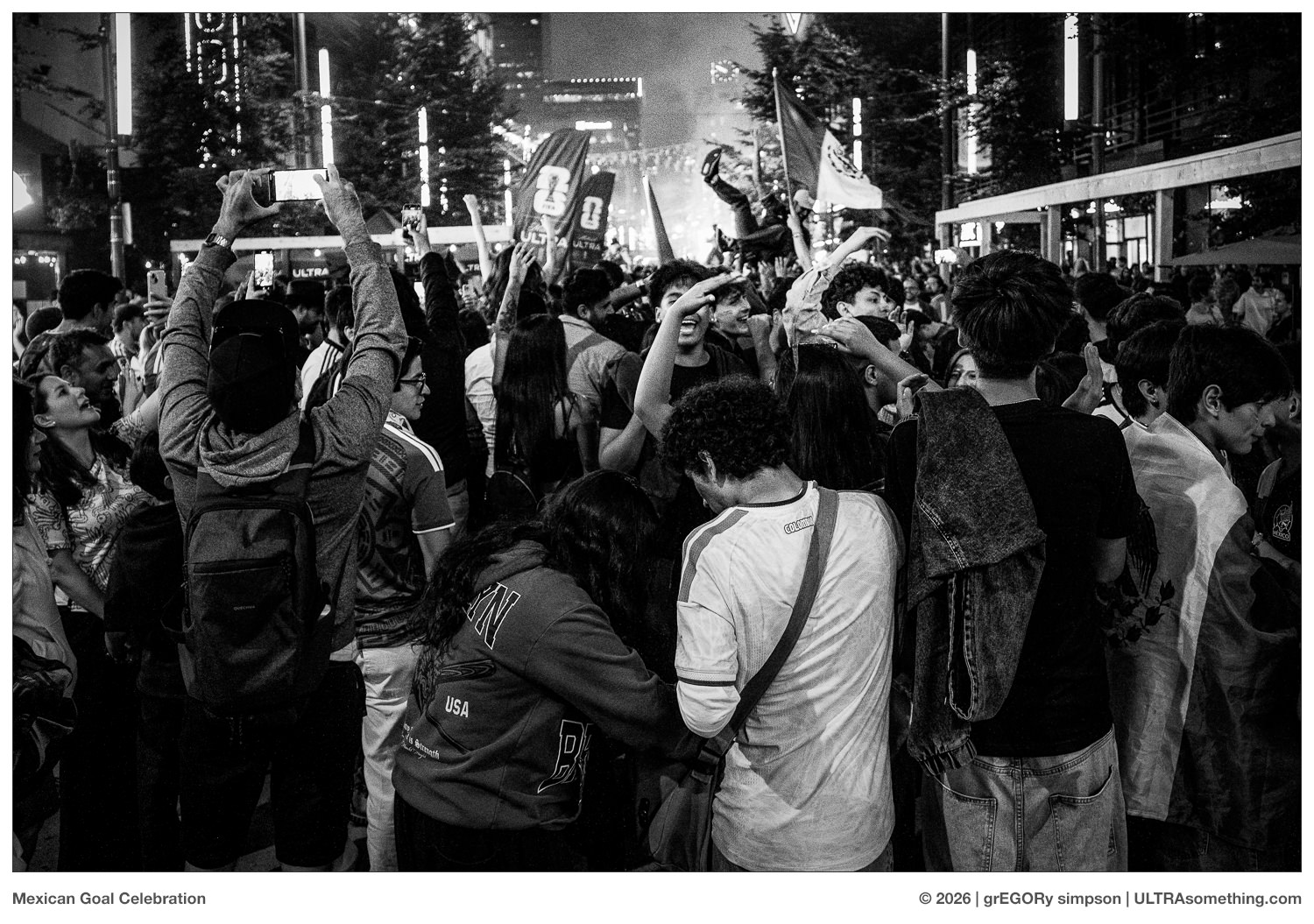
This past weekend, high on Rodinal, I took three cameras to Vancouver’s 420 pot protest to photograph others who shared my euphoric mood (albeit courtesy of a different chemical substance). Two of the cameras contained 35mm Tri-X, which I developed in a 1:35 solution. The third camera contained Fuji 160c color film, which I stand-developed at 1:100. While the photos might be somewhat lacking in compelling content, I have nothing but admiration for the Rodinal. In spite of some extremely contrasty lighting conditions — sometimes shooting directly into the sun — plus some schizophrenic exposure choices on my part, every single negative is scannable, printable and full of the tonal characteristics I desire.
I can hardly wait to blow through the bricks of Tri-X currently in my fridge. There are so many things to try: push-processing night shots; different dilutions; and, once the Tri-X runs out, alternate film stocks. While my dissatisfaction with the tonality and dynamic range of digital motivated my return to film a couple years ago, my film use remained “casual” at best. Now, my “discovery” of Rodinal (albeit 120 years late) has kindled that re-engagement with a vengeance. I suspect it’ll be some time before the kitchen sink returns to its usual food-preparation responsibilities.
My name is Egor. And I have a Rodinal jones.
©2012 grEGORy simpson
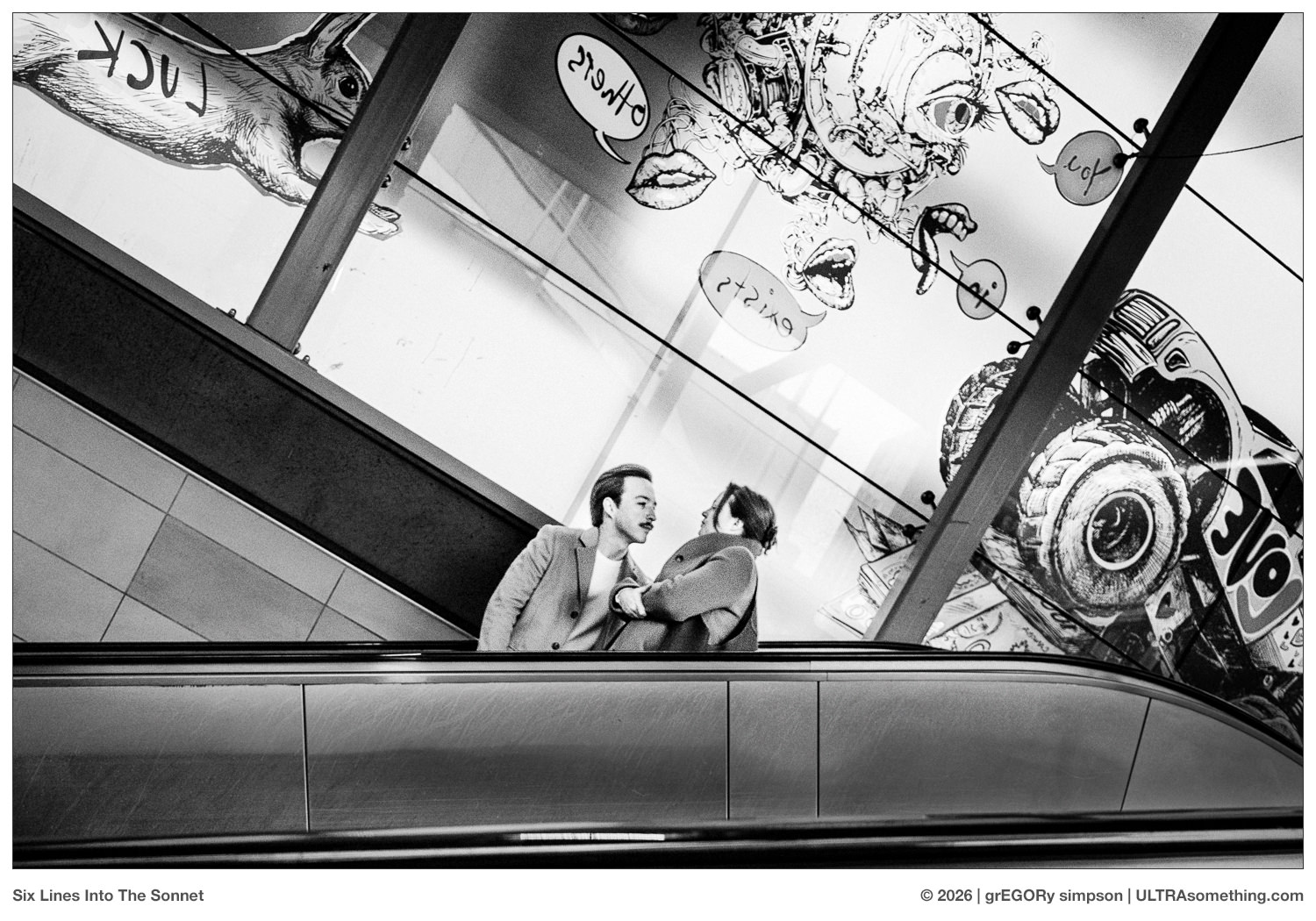
ABOUT THESE PHOTOS: “Imbibing Fee” and “Ladies Imbibe” were shot with a Leica M2 and a v4 35mm Summicron lens on Tri-X at ISO 400, developed 1:35 in Blazinal. “Imiber’s Incline” was shot with a Fuji GA645 on 160C color film, which was stand-developed 1:100 in Blazinal. “Darth Imbibes” and “The Dude Imbibes” were shot with a Leica M6TTL and a 28mm Summicron lens on Tri-X at ISO 400, developed 1:35 in Blazinal. “Lovers Imbibe” was shot with a Leica M2 and a Voigtländer 15mm f/4.5 Super Wide Heliar lens on Tri-X at ISO 400, developed 1:35 in Blazinal.
Additional photos from the 420 protest, all developed in Rodinal, can be found on ULTRAsomething’s “Bonus Content” page for 2012.
If you find these photos enjoyable or the articles beneficial, please consider making a DONATION to this site’s continuing evolution. As you’ve likely realized, ULTRAsomething is not an aggregator site — serious time and effort go into developing the original content contained within these virtual walls.