Now that I’ve retired from a career spent designing, documenting and testing electronic music gear, I can finally spend my time USING all of it, rather than just developing it.
Sure, as energy allowed, I’d dabble with composing and recording — releasing music in dribs and drabs, which I gathered and released as a 2-volume, 4-hour anthology earlier this year. But I simply never had the time to work on an entire, cohesive album — no matter how much it seemingly overlapped with my day job.
So, once gifted with the time to finally write and record my first full album since the early 90’s, and with so many musically divergent interests bubbling inside me, what sort of album should I compose?
Given my disdain for the genre, my answer surprised me: Why not a “pop” album?
“Pop,” of course, needs a seriously bold set of quotes around it, because anyone listening to my new album, 26.MM.DD, will probably struggle to find anything remotely “pop” about it. And that’s because “pop” doesn’t define the album’s sonic footprint, but my approach to writing and recording it. Here, the word “pop” means “get the listener in and out of a feeling quickly and efficiently before moving to the next.” It does not mean “sound like regurgitated banality.”
In truth, 26.MM.DD is rather sonically dense, with enough sound design to fry a factory full of transistors. But I wanted the album to reward different levels of listening; whether you put it on in the background, road-trip with it, or give it your full attention in a deep-listening session.
So what exactly does 26.MM.DD sound like? I could tell you it was influenced by 70’s krautrock, 70’s minimalism, 70’s giallo soundtracks, and 70’s experimental space music. But that would just be even more confounding, since the album doesn’t resemble any of those genres, nor does it sound even remotely like it came from the 1970’s. It’s cacophonous yet soothing; rhythmic yet droning. Modern, but with tendrils to the past.
Fortunately, there’s no need to describe what it sounds like, since you can simply listen to it on most any of the popular streaming platforms.
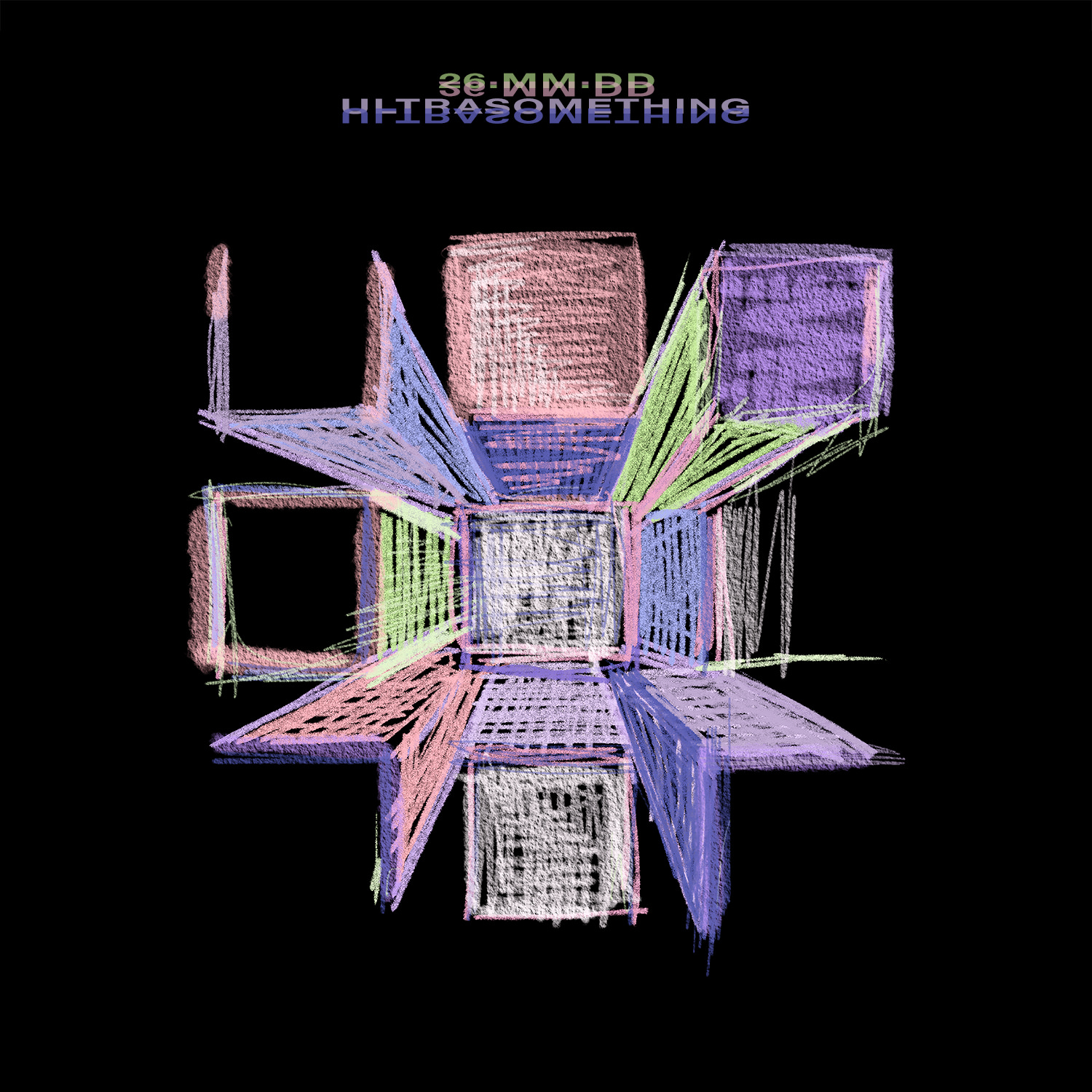
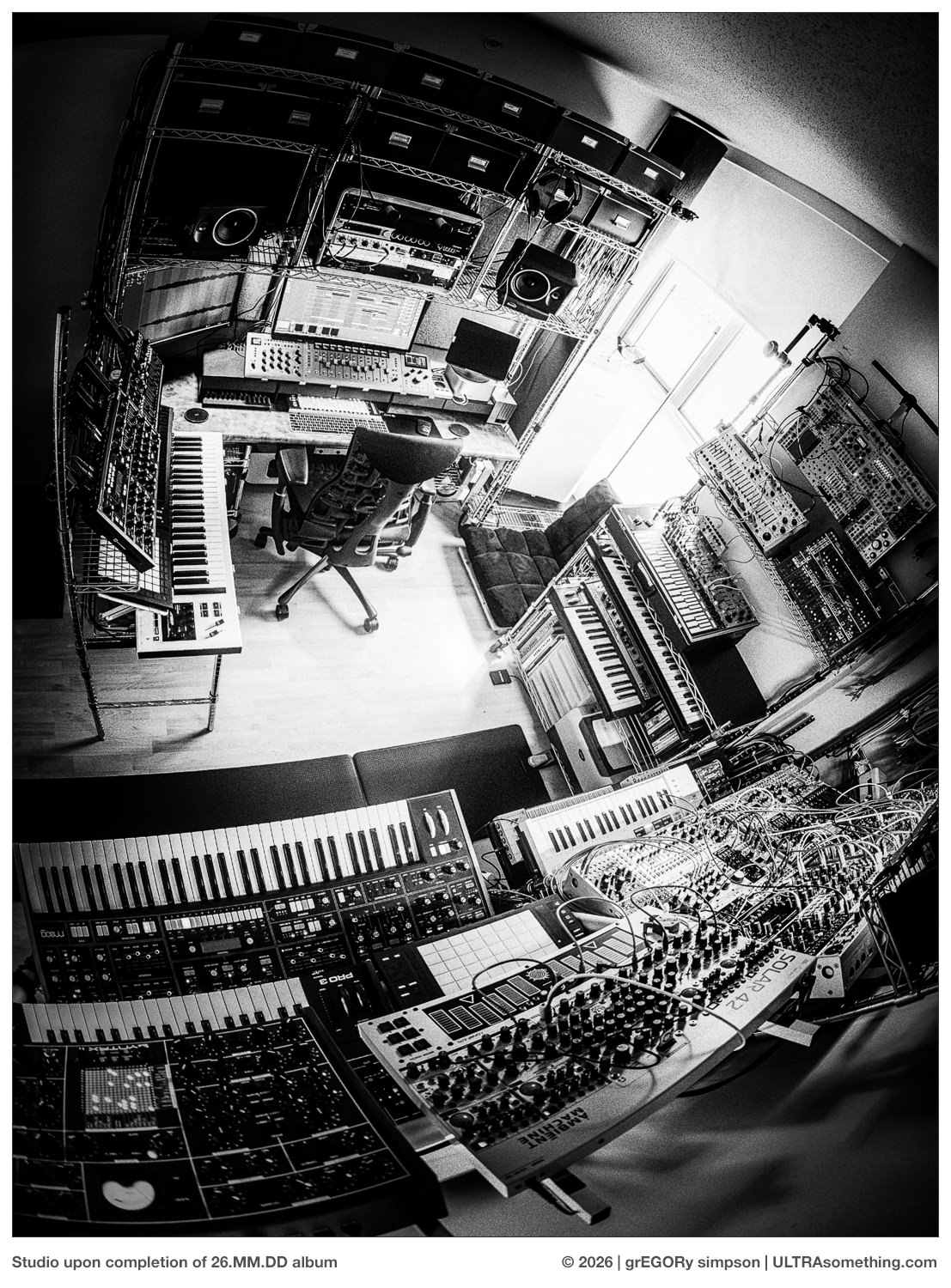
14-tracks. 49 minutes. A dozen different hardware synthesizers. And (as has become the tradition) cover art by Nicole Langdon-Davies.
So give it a listen.. or two… or more. And be sure to share the links with anyone you think might enjoy it. Just, maybe don’t tell them it’s a “pop” album.
Click the link below for direct access to 26.MM.DD on your preferred platform (such as Spotify, Apple, iTunes, Deezer, Tidal, YouTube, Amazon Music, etc…):
And for anyone who somehow missed the massive 2-volume anthology, released back in March, here are their links to the various streaming platforms:
Sounds, Tracks & Soundtracks (vol 1)
Sounds, Tracks & Soundtracks (vol 2)
©2026 grEGORy simpson
REMINDER: If you’ve managed to extract a modicum of enjoyment from the plethora of material contained on this site, please consider making a DONATION to its continuing evolution. As you’ve likely realized, ULTRAsomething is neither an aggregator site nor is it AI-generated. Serious time and effort go into developing the original content contained within these virtual walls — even the silly stuff. Those who enjoy a tactile engagement with photographs are encouraged to visit the ULTRAsomething STORE, where actual objects, including ULTRAsomething Magazine and the So Far So So anthology book are available for purchase.
COMMENTS : Comments will be moderated before they’re posted to the website, and commenting will be disabled on any article more than 6 months old.