Welcome, hordes of new ULTRAsomething readers! I hope you find this site both educational and inspirational, and that you enjoy your journey through its 13-year archive of photos, articles and music.
To you handful of returning readers, thank you for your continued support. Please treat the new visitors graciously, and be sure to share your wit with them, as you have with me.
In case you’re wondering what’s going on — why I’m welcoming new readers, and why this site has recently shifted to a faster and more robust server — the answer is simple: I have honed the art of writing seductive headlines, and am preparing for the voluminous traffic that will surely result.
Prior to this month, I was blithely unaware I even had a headline problem — believing, quite ignorantly, that my titles were the crème de la crème, and that my ability to artfully misspell a word, turn a phrase, or infuse a double- or triple-entendre was what made them so.

But that all changed when I wrote last month’s Superfluouuus article. Right before publishing, I noticed a new widget crammed into the corner of my site’s Admin screen, which said “28/100.” That’s it. No words. No context. Just a fractional number.
Curious, I clicked the widget and discovered it was provided by a newly installed Google Analytics plugin. Its sole purpose is to rate the ‘quality’ of the article’s title — and thus determine the likelihood that Uncle Joe and Aunt Josephine will actually read it. In other words, it’s my article’s clickbait score.
I thought the need for such a feature silly, scoffed at the ridiculously low rating assigned to Superfluouuus, and published the article anyway. “What does Google know?” I thought.
Apparently, the answer is “a lot more than I do,” because Superfluouuus had the lowest first-month readership of any article in the history of ULTRAsomething. My knee-jerk reaction was to attribute this to the article sucking. But that’s obviously not the reason, since people would need to actually read the article in order to know that it sucked. This could mean only one thing: it’s the title that sucked — apparently unclickably so.
So with renewed determination, I decided to rethink my entire titling strategy. I would learn the art of clickbaiting.

Previously, I would compose a title after the article was written — choosing something I felt reflected the subject matter and its mood. Perhaps I needed to reverse this procedure, and echo a technique used in the 1960’s by legendary B-movie director, Doris Wishman, who wouldn’t start writing a screenplay until she’d first thought of a title lurid enough to warrant the trouble.
In a way, Doris was an early practitioner of the art of ‘clickbaiting’. Only, in Doris’ case, she wasn’t looking to capture clicks; she was looking to capture cars cruising past the drive-in marquee on the outskirts of town.
I typed a few of Doris’ titles into my new Google Analytics toy — curious to see how Google rated them. “Keyholes are for Peeping” scored a 42, and “Bad Girls Go To Hell” earned a 48. Curiously, “Too Much Too Often!” only managed a 28 — the same rating as the disastrously inadequate “Superfluouuus.” Clearly, even Doris could have benefited from an online algorithm.
Remembering lessons I’ve learned from the many years spent publishing this site — that creativity is anathema to the masses — I decided to abandon the idea of writing titles that I like, and instead write titles that Google’s algorithms will like.
According to Google, an average title scores between 40 and 60. Anything less and you’re wasting server space, and haven’t any right to a carbon footprint on Google Earth.
My four previous titles — Onerousity, AI, Dinosaur and Nocturnes — each scored a paltry 23, making Superfluouuus’ 28 rating seem somewhat good in comparison. In fact, out of all nine titles on ULTRAsomething’s landing page, only In a Gotta-Do Vida made it into the “barely acceptable” range of 40-60, scoring an impressive (for me) 54! Checking my web stats, I confirmed that, indeed, In a Gotta-Do Vida had the highest readership of those nine articles.
Google suggests web publishers craft titles that score 70 or higher, in order to attract clicks. Because my readership stats are dismal, and so many of my titles rate in the 20’s, I decided to go ‘all in’ and learn to compose Google-worthy headlines.
After extensive trial and error, I figured out which words Google’s algorithms liked (and which it didn’t), and eventually gained the skill to consistently churn out titles with a 93 rating (such as the one adorning this very article).
Unfortunately, I never found the right combination of words to score a perfect 100. But that’s probably because I lost interest in using the tool for its intended purpose, and grew far more interested in using it to glean insight into modern society.

For example, compare these two titles: “5 Surprisingly Beautiful Uses For Your Mystical Underpants” and “5 Surprisingly Inspirational Uses For Your Mystical Underpants”. The first scores a 93, while the second scores only a 68. The only difference is that I replaced the word, ‘beautiful’ with the word, “inspirational’ — but that single change resulted in a 25 point penalty, and the title’s banishment to the bowels of mediocrity. Beauty, it seems, is far more important than self-actualization.
Upon learning of society’s lust for beauty, I then tried to amplify the score through specificity. Personally, I’d rather something be ‘ravishing’ or ‘beguiling’ than plain old ‘beautiful.’ Yet the use of either adjective also resulted in a 25-point reduction in my score. Apparently, generalities are hot and poetry is not.
Employing just the right adjective is definitely a key component toward satisfying the algorithm. For example, using the phrase “hauntingly beautiful” instead of “surprisingly beautiful” results in a 3-point reduction, while other replacements for the word ‘surprising’ yield even lower results — informing us that ‘surprise’ is a particularly important human motivator.
Nouns, it seems, are totally meaningless. Which suggests that what you write about doesn’t matter one bit, just as long as you hype it properly. To me, the most clickable part of this article’s title is the phrase “mystical underpants.” But to Google, it’s irrelevant. “5 Surprisingly Beautiful Uses For An Old Bedsheet” has an identical rating. As does a list of beautiful uses for “your green mascara,” “vintage chainsaws” and “a deceased muskrat” (which is the one I’d be most likely to click).
It’s no wonder Doris Wishman never transcended her status as a ‘cult’ director. Without access to Google Analytics, she had no way of knowing that “Keyholes are for Peeping” would have increased its box office receipts significantly had she simply retitled it, “5 Surprisingly Beautiful Ways to Use a Keyhole.”
Anyway, much like how Doris and other old exploitation directors employed “square up” reels to keep the duped audience from feeling cheated, here is my half-hearted attempt to fulfill the promise of this article’s title:
- Fashionable COVID mask
- Party toga for your sock monkey
- Gerbil hammock
- Bitchin’ bowling ball bag (Men’s Size XXL only)
- Trailer park bathing suit
And if you’re wondering where, exactly, you go about finding mystical underpants, stay tuned for next month’s article: “3 easy ways to mystify your undergarments”.

©2021 grEGORy simpson
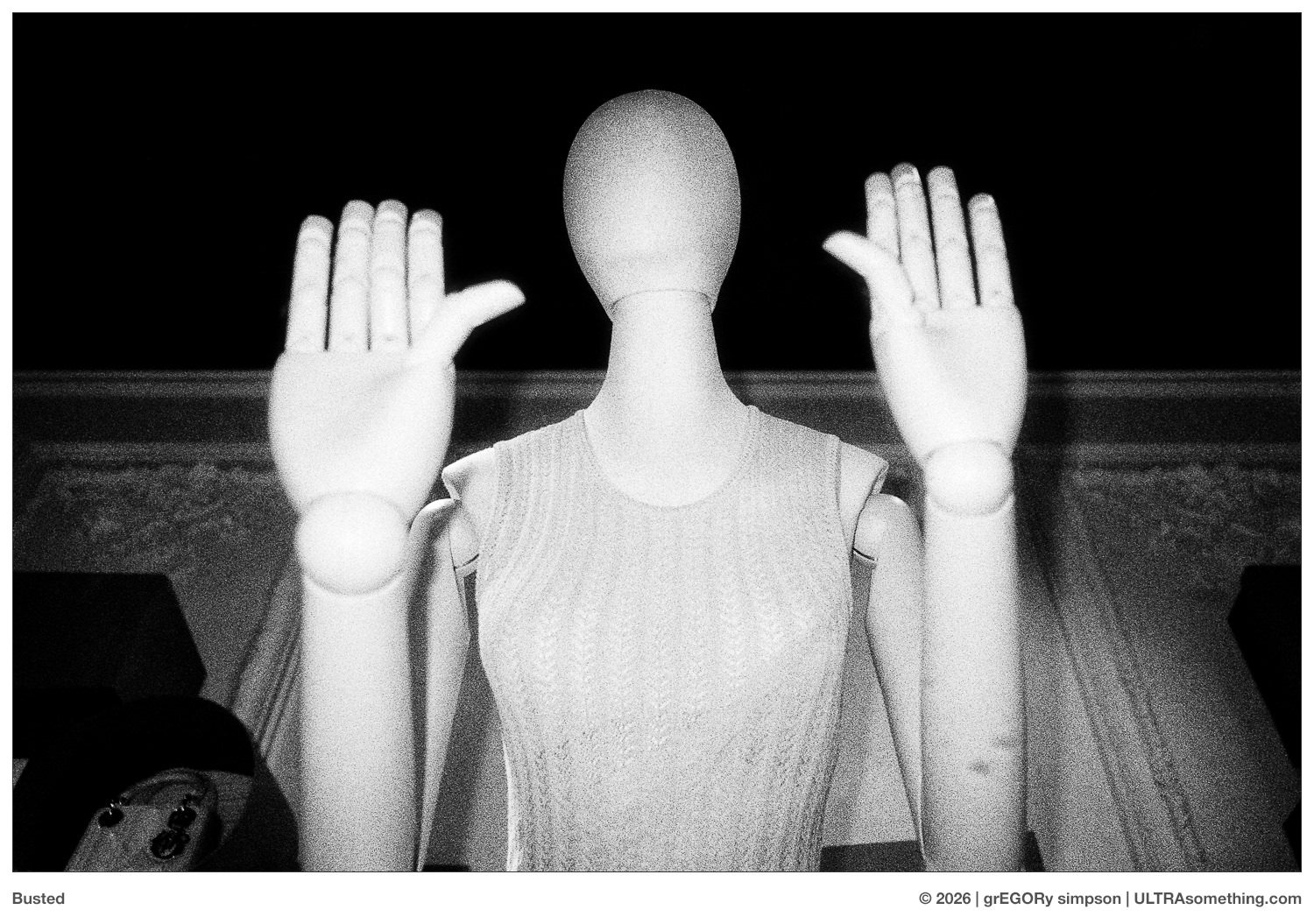
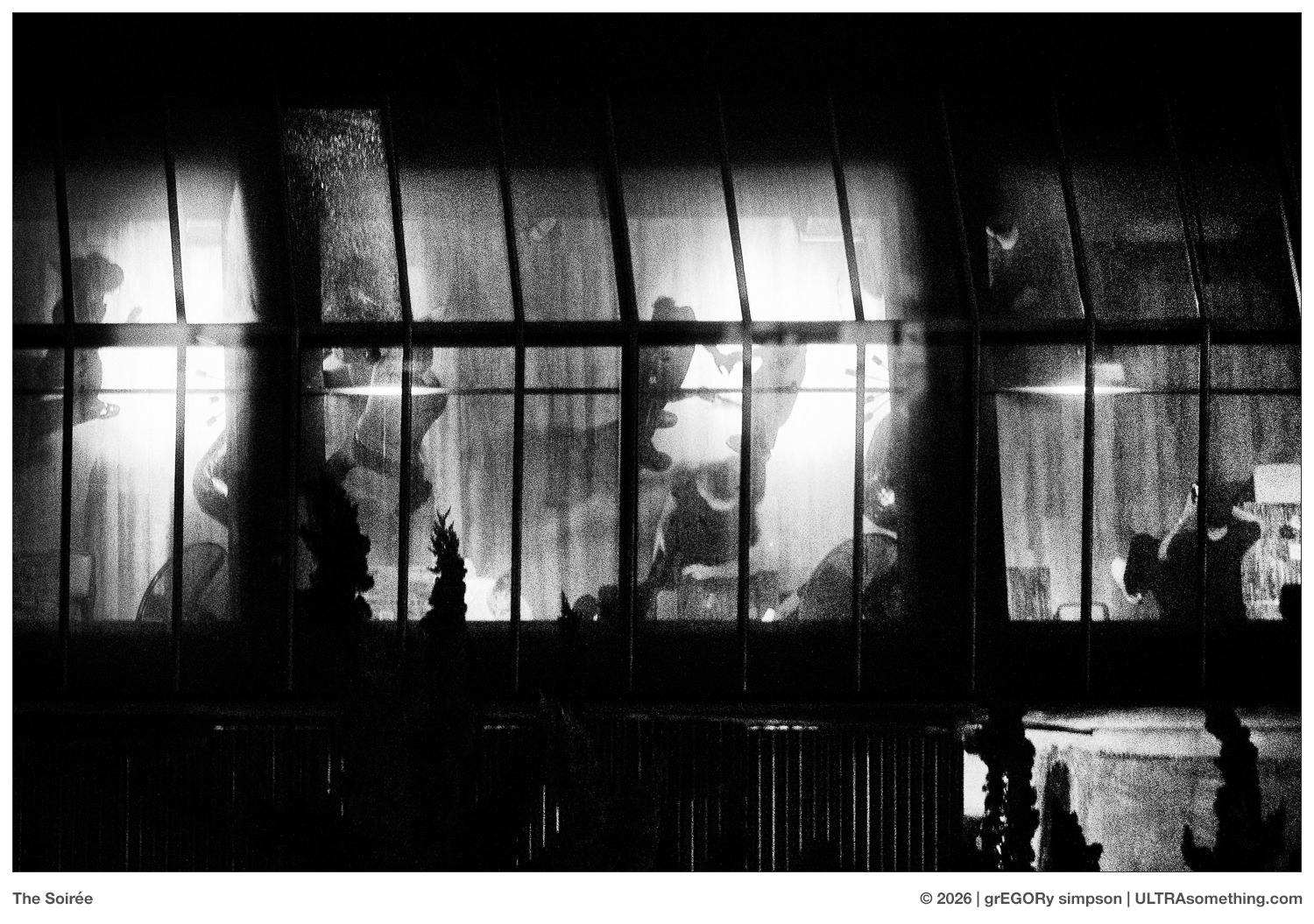
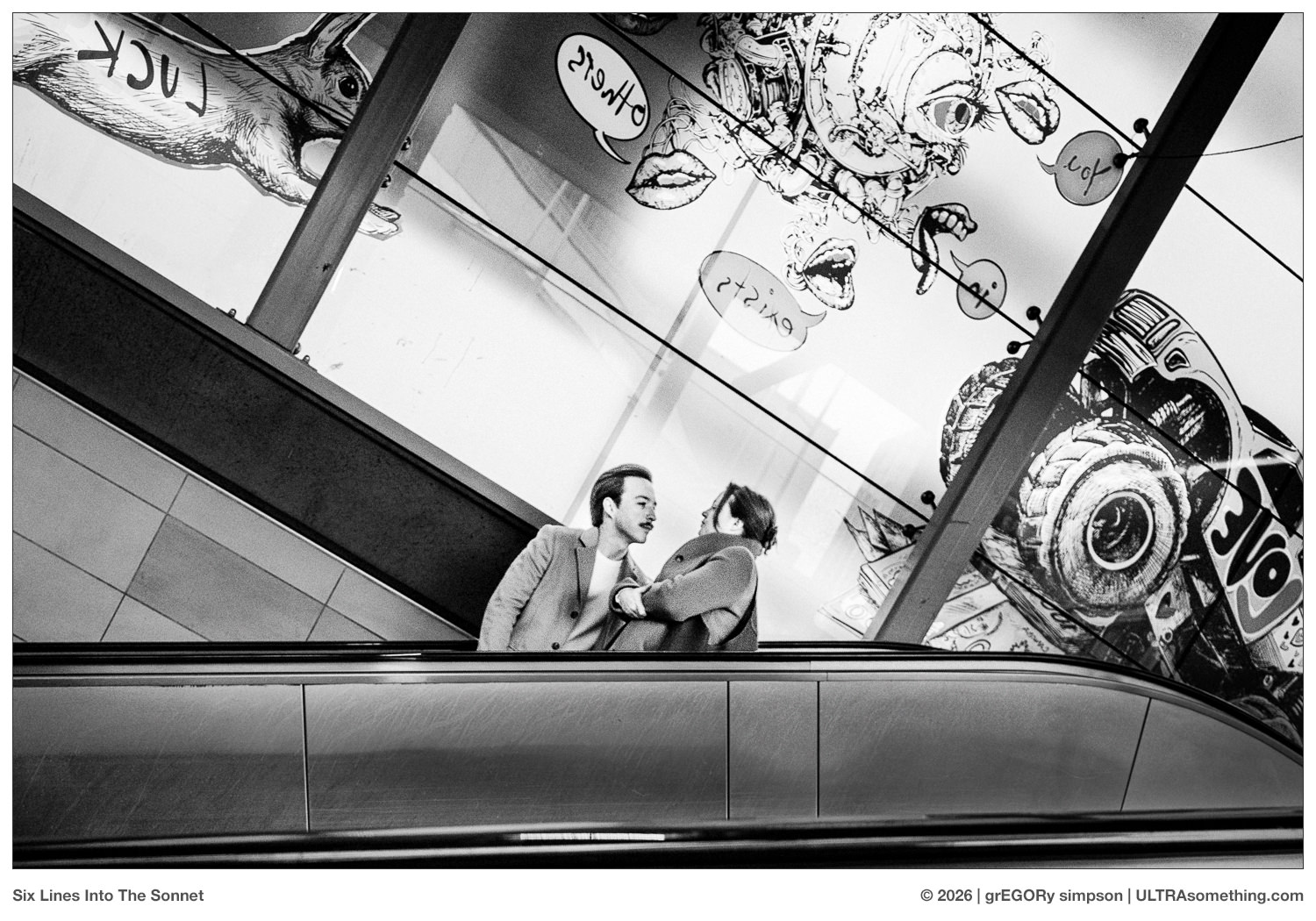
ABOUT THE PHOTOS : Upon completing this article, I felt a moral obligation to better square the deal with anyone who clicked through with an expectation of at least some mysticism. So the accompanying metaphorical photos are designed to stimulate discussion and debate amongst the more spiritually inclined readers. Conception begets birth — where the future is unwritten. Are the blanks filled in through Free Will? Or through determinism? And if determinism, then by the divine intervention of Gott I’m Himmel? Or via the duality of a Ghost in the Machine? Then forward, into the light Toward Bardo, to burst forth again into another conception.
Of course, it’s entirely possible I made all this up and that the photos are nothing more than random shots from a Leica M10 Monochrom, with “Conception” using a Voigtlander 50mm f/1.5 Nokton; “Free Will” and “Gott im Himmel” employing a 21mm f/3.4 Super-Elmar-M; and “Ghost in the Machine” and “Toward Bardo” both utilizing an old Canadian-made 35mm f/2 Summicron (v4). The fact that Toward Bardo was shot in Tokyo could either be an additional indication of the Buddhist implications of the photo; or perhaps a sly nod toward my own personal concept of heaven. Or maybe it’s just anther random coincidence. God only knows… or, more accurately and less colloquially, I only know… which may actually be very Buddhist of me… or not. Feel free to debate amongst yourselves, but please do so on another forum: As we all know, this is strictly a serious, pure and unadulterated photography website.
REMINDER: If you’ve managed to extract a modicum of enjoyment from the plethora of material contained on this site, please consider making a DONATION to its continuing evolution. As you’ve likely realized, ULTRAsomething is not an aggregator site. Serious time and effort go into developing the original content contained within these virtual walls — even the silly stuff.