I was originally planning to shape this article around the subject of influence. How it’s important for photographers to look beyond the confines of the photography genre for new sources of inspiration. How painting, literature, music, mathematics, architecture and nature all can and should play a substantial role in guiding one’s photography. But that’s all a bit obvious, isn’t it?
So I scrapped the idea of writing about influence as a general topic, and decided to write specifically about the influence Mark Rothko had on this particular series of photographs. It featured a meandering yarn that detailed my persistent desire to produce photos imbued with a similarly soothing hypnotic geometry, and how I chose to employ slit-scan photography as a possible means to this end. Ultimately, the discussion managed to teeter between trite and pretentious — a rather spectacular feat in its own right — neither of which matched the tenor I had originally hoped for the article. So that draft, much like the previous, exited my Mac via the trash icon.
I switched tactics — re-focusing the essay to explore my ongoing fascination with chance. Specifically, I would discuss how I frequently devise some sort of strictly controlled environment under which photos must be taken, but then leave the actual photos to chance. I’d just done something similar to create the images that accompanied my previous article, Folding Time, and here I employed the same technique — but with an entirely different set of rules under which serendipity was allowed full rein. The topic proved worthy, but this particular set of photos was perhaps a bit too deeply dipped in seren to effectively illustrate my point. So, draft #3 also found its way to the trash.
The slit-scan photos sat in limbo for a couple of months, waiting for an outlet. Upon revisiting the exposures, it occurred to me that a vBook would provide the optimum showcase. So I created one. I then decided to pen an essay about the formation of the vBook itself — specifically, about how the soundtrack was composed as a sonic simile: how the fleeting threads of melody were like the horizontal scan lines; how the dense harmonic timbre corresponded to the film grain; how the occasional metric hiccups were meant to represent the randomly occurring vertical frame lines. After writing for the better part of a day, I suddenly realized that no one other than me would care one bit about any of this…
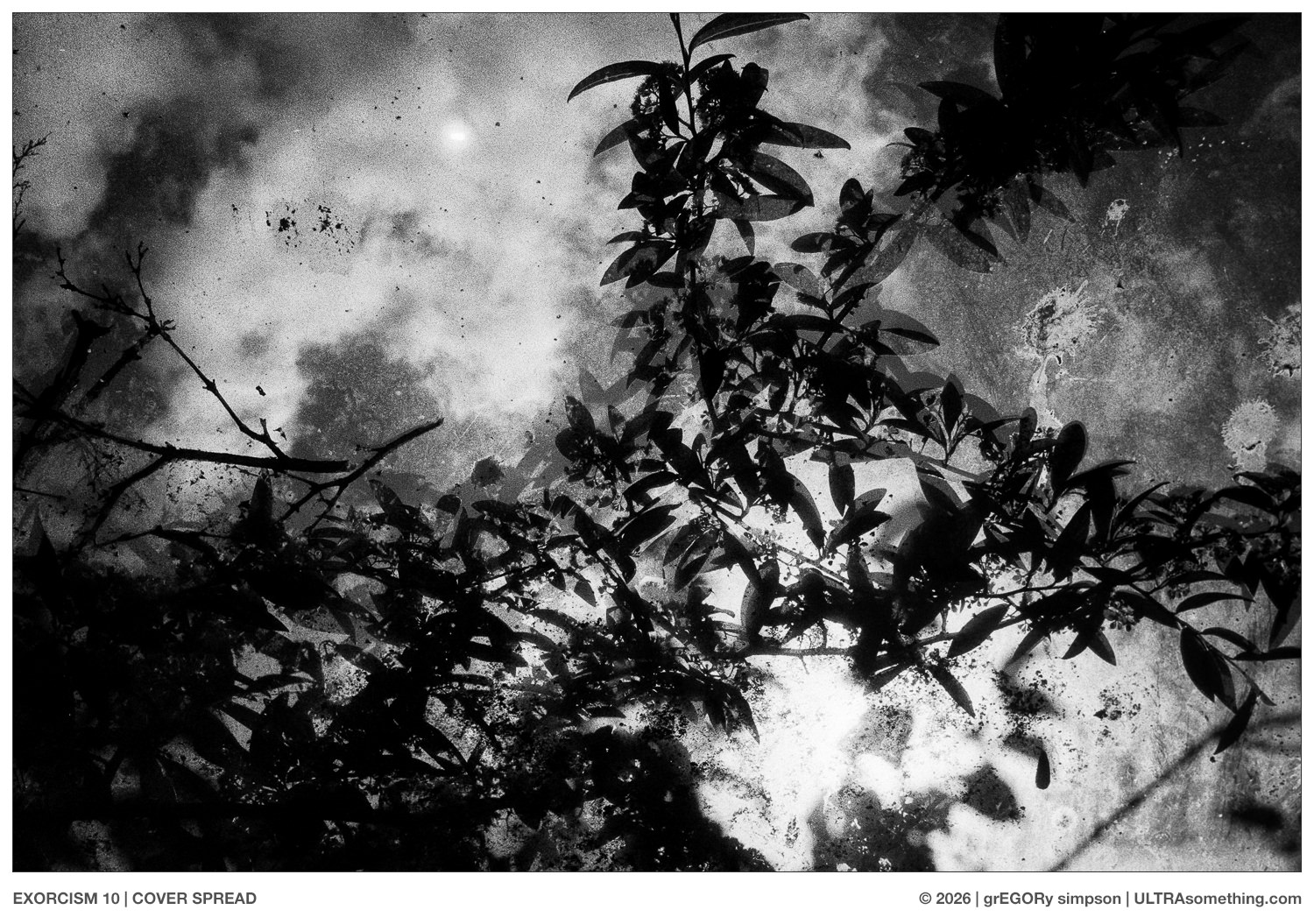
So, in the end, I decided to write about nothing. It’s a vBook. And just like all the other ULTRAsomething vBooks, it combines original photos of a unifying theme with original music that (hopefully) reinforces that theme. This particular theme happens to be slit-scan photos. Either you like it or you don’t. Really, what else needs to be said?
©2016 grEGORy simpson
ABOUT THE PHOTOS:
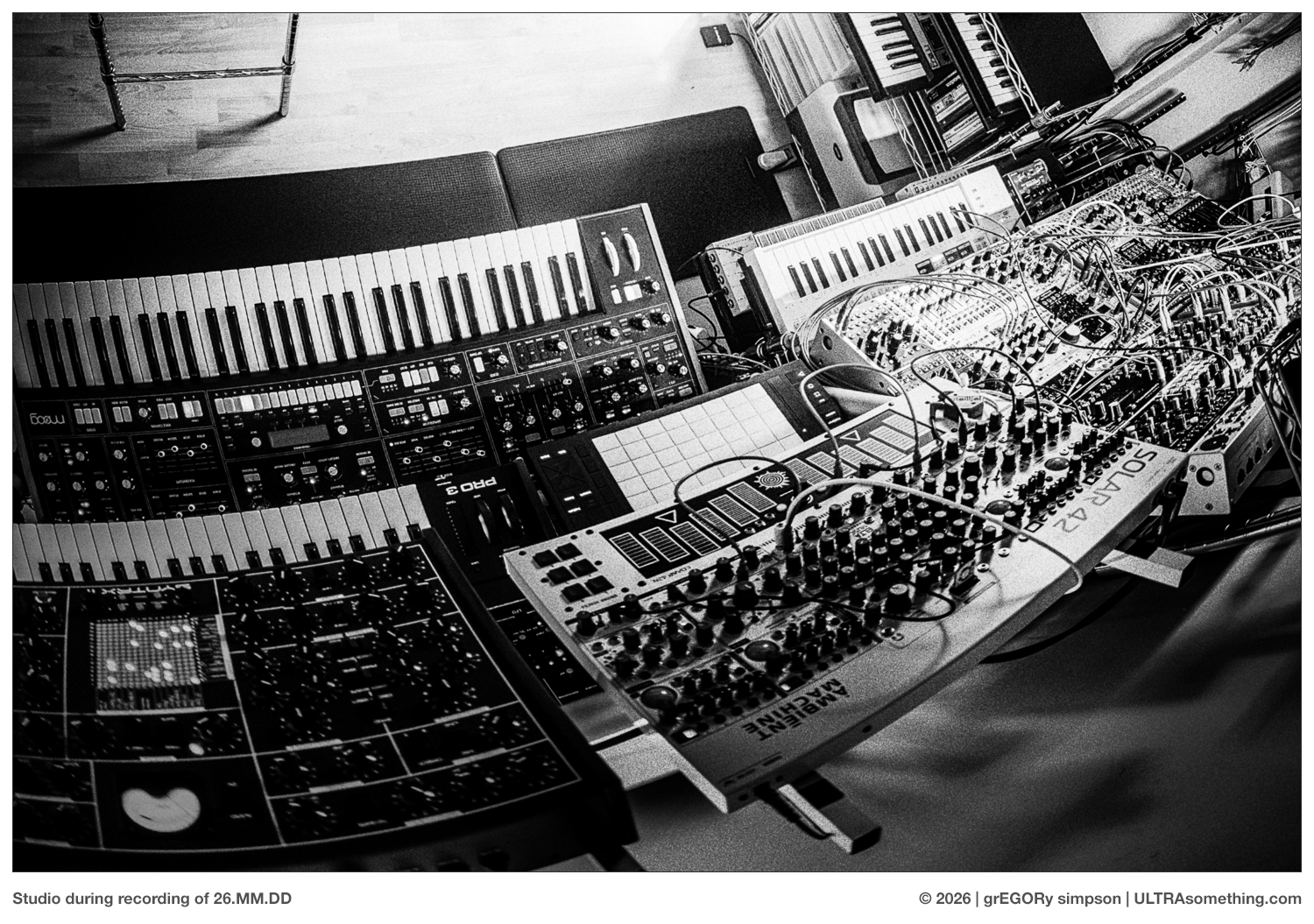
What happens when you take a Lomography Spinner 360 camera down to the docks at Vancouver’s False Creek, but instead of holding the handle while the camera rotates, you hold the camera and let the handle rotate? You get photos a lot like this. All photos taken on Bergger BRF400+ film and developed in a 1:50 solution of Rodinal (Blazinal). The soundtrack was recorded into Ableton Live, and is mostly a product of modular synthesis, though a couple of software-based virtual instruments were used for the piano part and the string-synth pad. The vBook, itself, was prepared in Apple’s Final Cut Pro X.
REMINDER: If you find these articles to be entertaining, inspirational or even helpful agents in your war on insomnia, please consider making a DONATION to this site’s continuing evolution. As you’ve likely realized, ULTRAsomething is not an aggregator site — serious time and effort go into developing the original content contained within these virtual walls.