Many years back, while working an architectural photography gig, I noticed a fellow who appeared keenly interested, yet overtly resentful of my presence. After the shoot, he strolled up and introduced himself. He told me that he’d once been an avid photographer, but had recently lost all interest in it. I feigned curiosity in his tale — story arcs such as his are common, and I was rather certain his would follow a similar trajectory. As a hobby, photography’s instant gratification and accelerated learning curve makes it particularly enticing to people hoping to unlock their inner artist. But once the fledgling fervor fades and the credit card cools off, what they really discover is that photography — just like any art form — requires personal vision and dogged determination. Over the years, I’ve seen many a passionate photographer’s dreams disappear in a final puff of ennui.
His story, however, did not conclude with the usual admission of inspirational malaise, but with brazen bravado. He quit photography, he said, because he’d “learned the secret to being a great photographer,” and thus no longer felt inspired to take photos.
It was at this point that I ceased feigning interest and became genuinely attentive.
“You found the secret to photography?” I asked, somewhat incredulously.
“Yup. I realized it was all just a trick,” he responded. “Do you know what it is?”
I hadn’t a clue.
“It’s knowing where to put the camera!” he boasted, without waiting for my response. He glanced furtively over both shoulders then, to insure he wouldn’t be overhead, leaned in closer and added, “There’s only one place to put it, and once you know where that is, there’s nothing special about photography any more. It’s all just a trick.”
Instantly, my mind was awash with more questions than I could process, collate or articulate. Fortunately my new friend — having fully embraced the mentor role — intuited that I was a willing pupil, and happily offered additional explanation.
He told me that if he saw a photograph he knew someone had paid for — sometimes a landscape, but usually an architectural shot — he would go to that same location. Then, using the existing photo as a guide, he would find the exact spot where the original photographer had placed his camera. He would choose a matching focal length, lock the camera to the tripod and take a photo. “When I did this,” he said, “my photos were every bit as good as the pro’s. That’s when I knew it was all a trick.”
“But what makes it a trick?” I asked.
“If you put the camera in the right place, then you get the best shot,” he said. “Once you do that, there’s no difference between your photo and the one they paid for. In fact, they should have just hired me.”
“But the person who took the original photo was the one who had to actually find the right location for the camera,” I replied — amazed I was attempting to make some sort of logical counter-argument to what I thought was his rather irrational one.
“What do you mean?” he asked. “I would put the camera where they put it.”
“Right,” I said. “But they were there first. They didn’t have someone else’s photo to guide them. Their photo was the one that showed you where to put your camera.”
My friend grew agitated by my ignorance. “That’s not the point,” he huffed. “When you learn that there’s only one place to put the camera and you put it there, then you realize there’s nothing to photography. That’s why I don’t do it any more. It’s too easy. There’s no challenge.”

Throughout the ensuing years, this conversation has had a lasting and haunting effect on me. How can anyone so thoroughly fail to distinguish creation from re-creation? And if there is one and only one perfect place to put a camera, then how do you convey different moods? And why does drone photography even exist? Did we all just simultaneously discover that earth-bound camera locations aren’t so “perfect” after all? And what if you take photos of subjects that aren’t static? Anyone can go and stand where Alfred Eisenstaedt stood in August of 1945 — but that doesn’t mean they’ll snag a photo of a sailor kissing a nurse. And what about lighting the scene? Are we to believe the pro architectural photographer used only ambient lighting? Or that two landscape photos would be identical no matter the season, time or weather?
Curiously, each time I reflect on this conversation — and I reflect on it often — I actually grow more forgiving of my long gone but ne’er forgotten friend. In fact, over the years, I’ve come to admire him. Unlike most people, he had obviously embarked on his photographic journey with a mission. He had an end game — to reach a point at which he felt that he was capable of taking a photograph indistinguishable from a professional’s. Once he’d done this, in his mind, he’d “solved” the ultimate photographic challenge. There was nothing else the medium held for him because he viewed photography as a purely technical pursuit.
But in my current, post-commercial guise as a thoughtful and personal photographer, knowing where to put the camera is rather low on my list of concerns — right along with focus, color, sharpness, dynamic range, fidelity and literalness. So how do I measure my progress? What exactly is my end game? There must be some fundamental need that drives me. Some question that, once answered, would cause me to dust off my hands and hang up my cameras for good.
Obviously, I’m on some sort of path — as meandering as it might be. So where does it lead? Pausing to survey my present position, I discovered familiar surroundings — tell-tale indications that every creative journey I’d ever taken, regardless of the actual media, had followed a similar course. The simple fact is, the better I get at doing something that I care about, the fewer the number of people who actually appreciate it. My favourite ULTRAsomething articles will inevitably be inversely proportional to the number of people who read them. Friends who once asked me to “play something” on a musical instrument eventually altered their requests to “play something people might like.” My own wife, who used to say “you’re the photographer, you take the photos” now uses her iPhone to take the photos herself — because, as she said, she “knows how to take pictures that people like.”
No matter what I do, my goal is always the same — to improve. But unlike many people who seek to improve through external guidance or approval, I look within — for ways to push beyond the trite and expected; for untapped thoughts and unexplored avenues. If someone is well and truly guided by personal vision, then what could be a greater indicator of success than achieving a vision so personal, so unique, that the creator — and only the creator — could actually appreciate it?
And thus, my ultimate goal became obvious: to one day take a photograph that I — and only I — admired.
Now it’s important to note that this is not the same thing as taking a photograph no one admires. That’s something we’re all capable of accomplishing on a regular basis. Rather, I’m hoping to reach that point where only one person in the entire world is enamoured with a particular photo — and that one person is me. In doing this, I will have achieved the ultimate expression of personal vision, and my journey can finally end.
Thankfully, I have demonstrable evidence of my declining popularity, and thus know I’m getting closer to the end each and every year. Alas, there are still some people who claim to like what I do — so the finish line remains somewhere beyond the horizon. But at least I’m no longer exploring photography willy-nilly and without direction. Like my old mentor, I now have an end game.

©2016 grEGORy simpson
ABOUT THE PHOTOS:
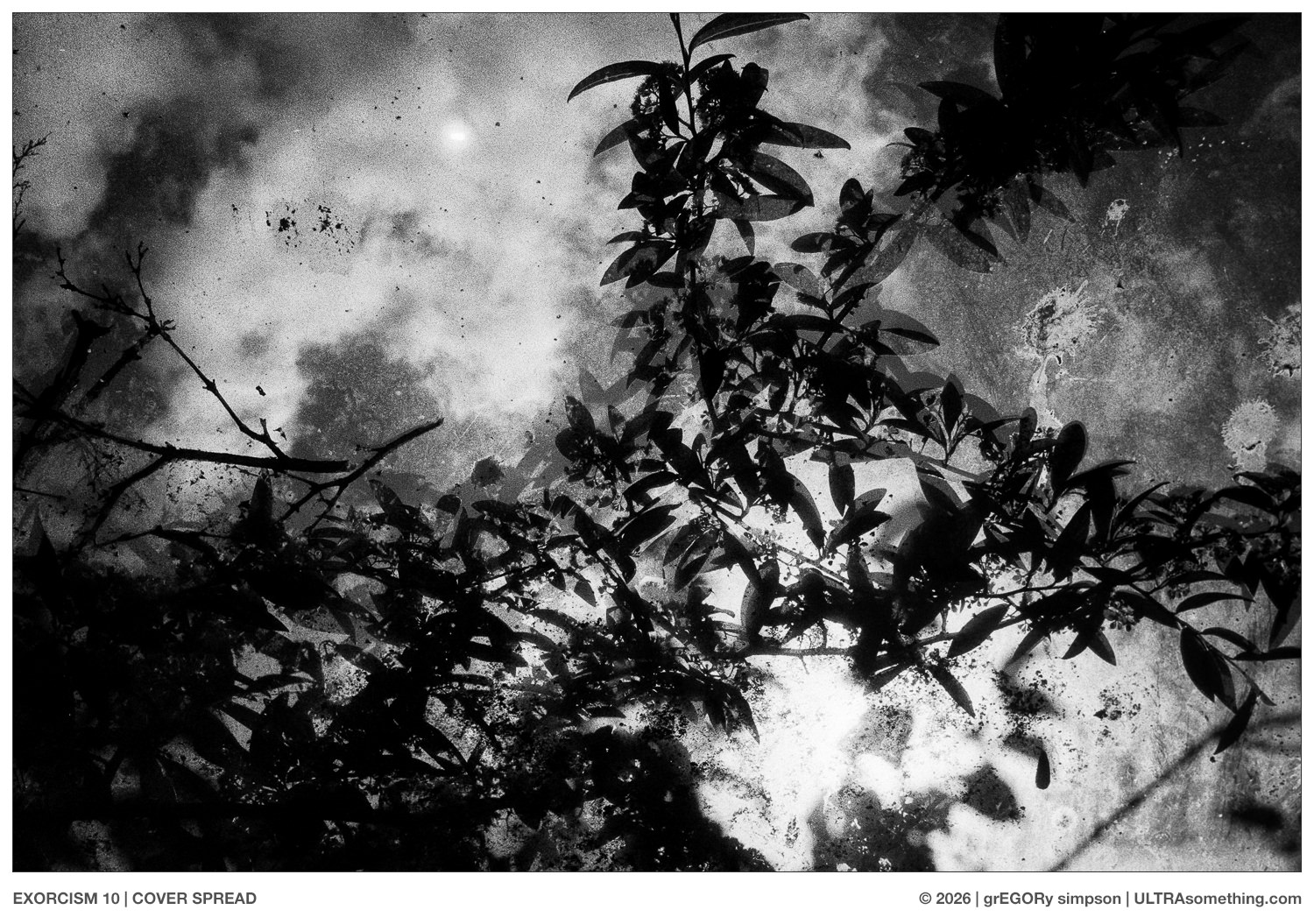
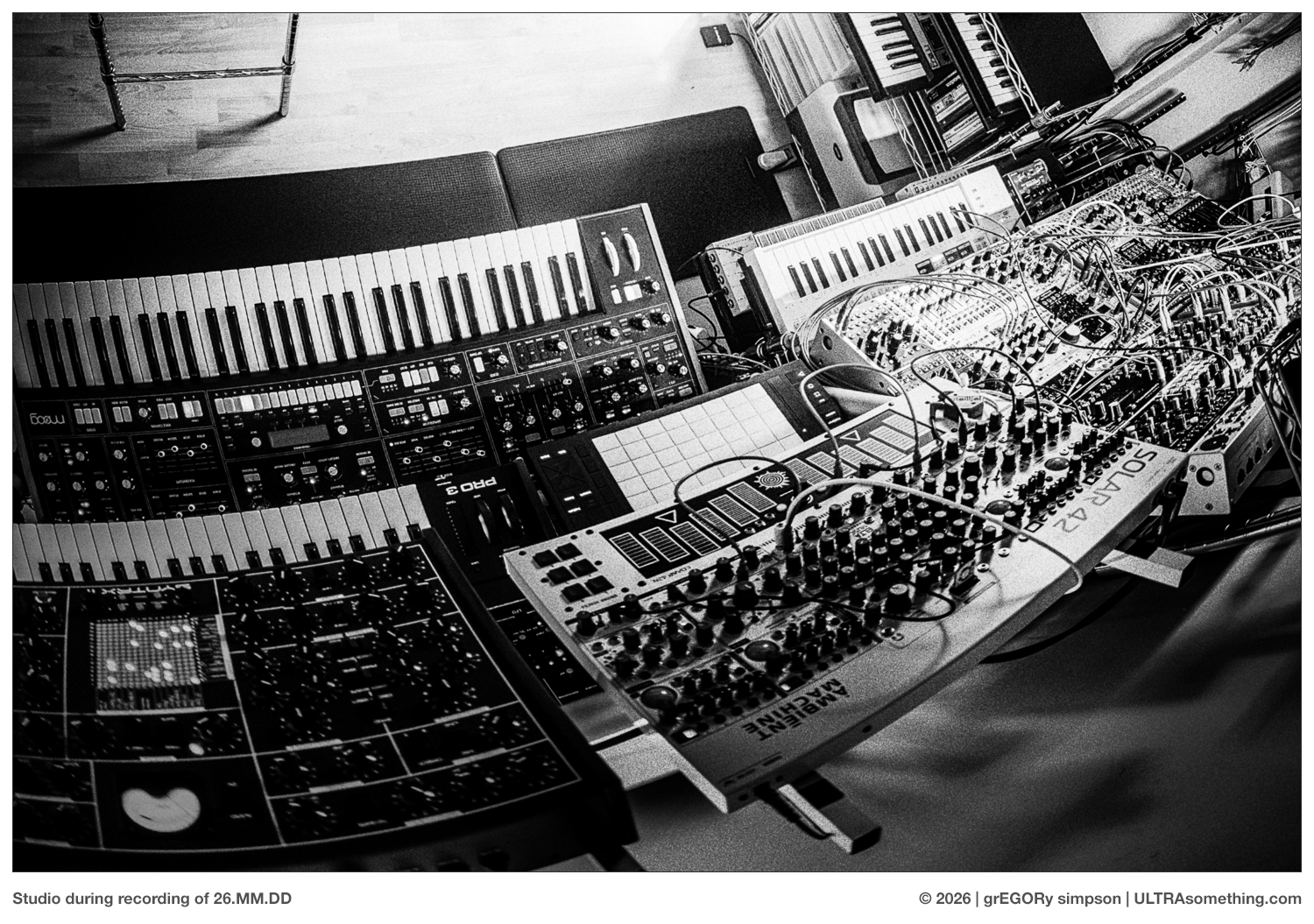
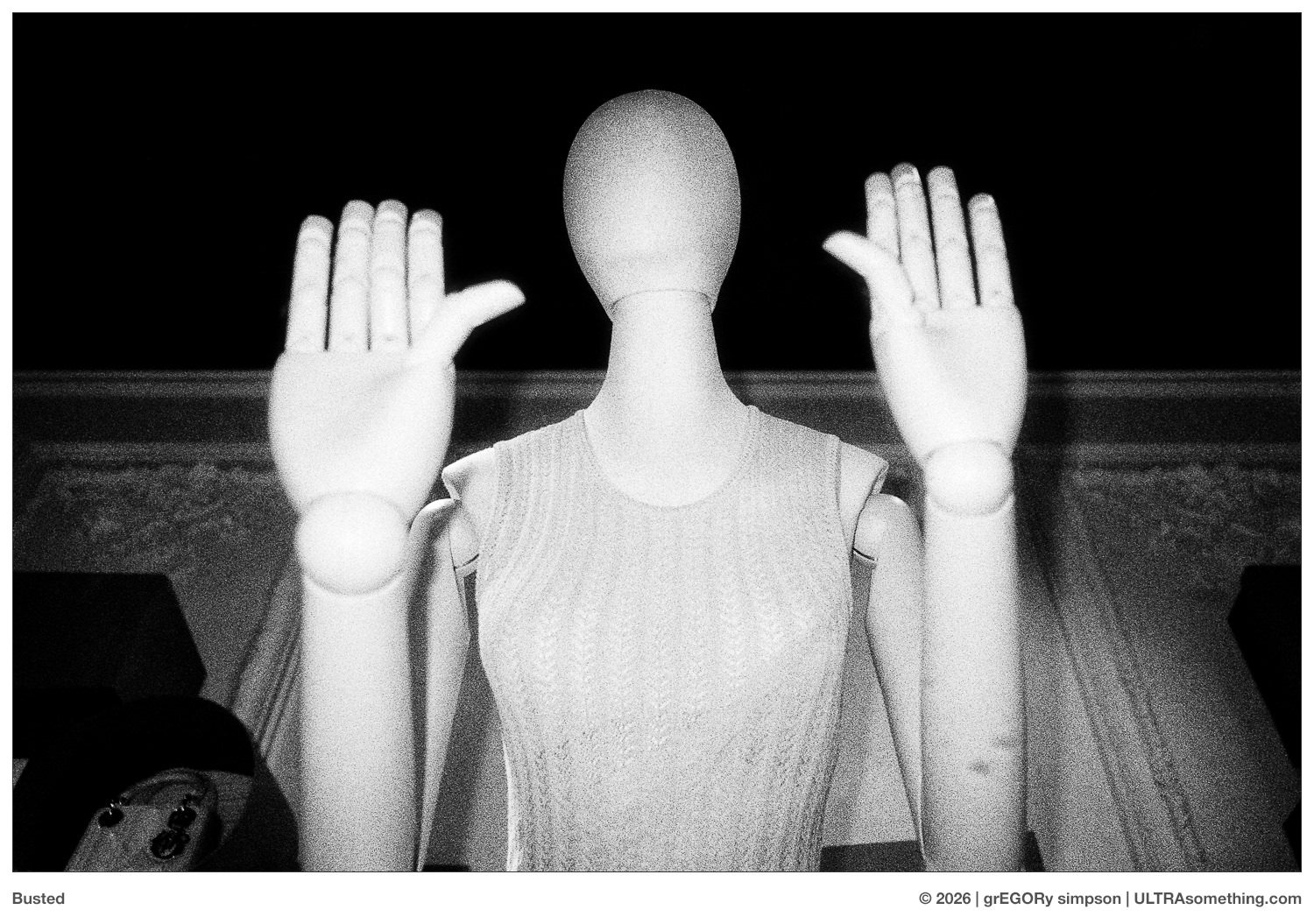
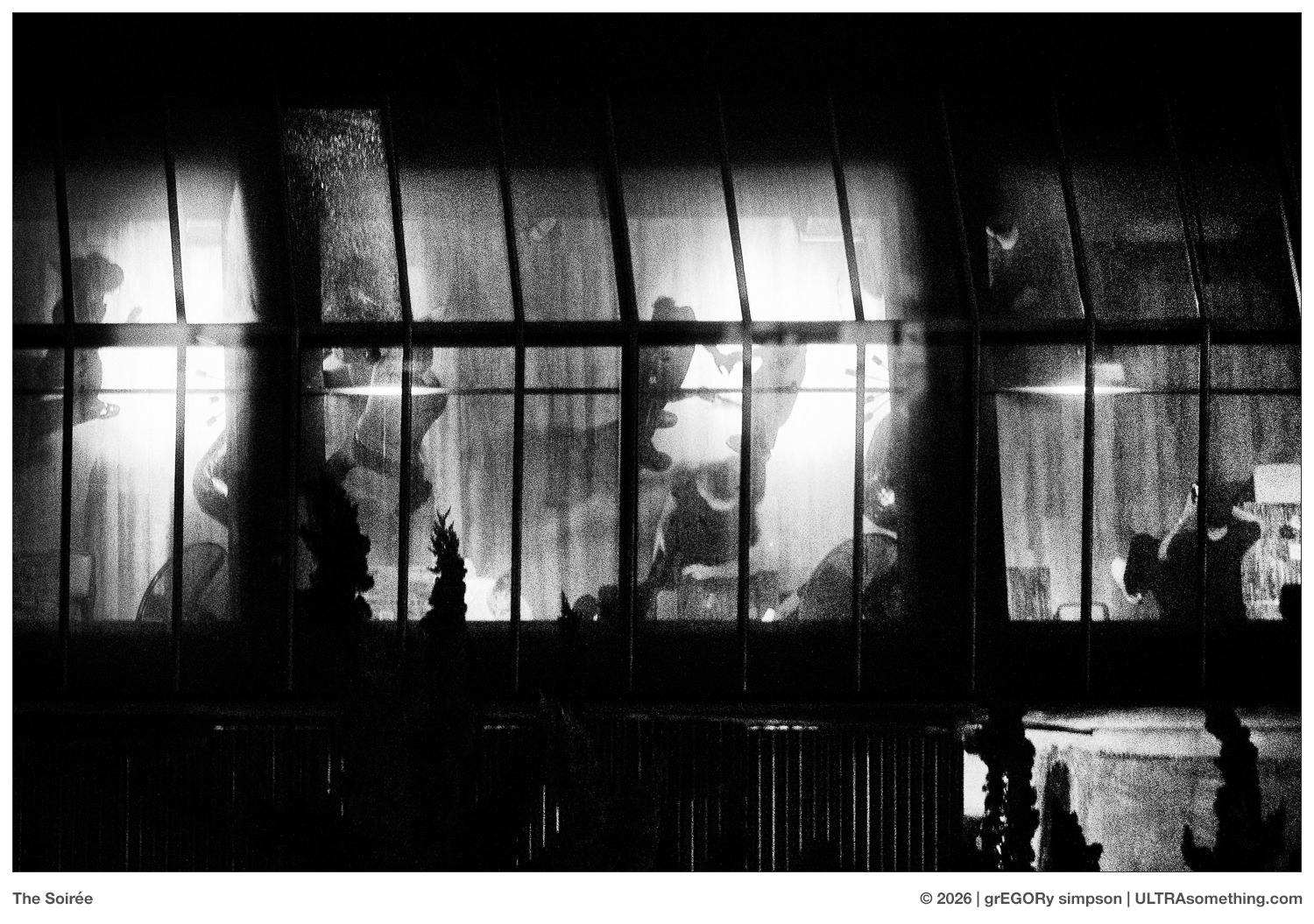
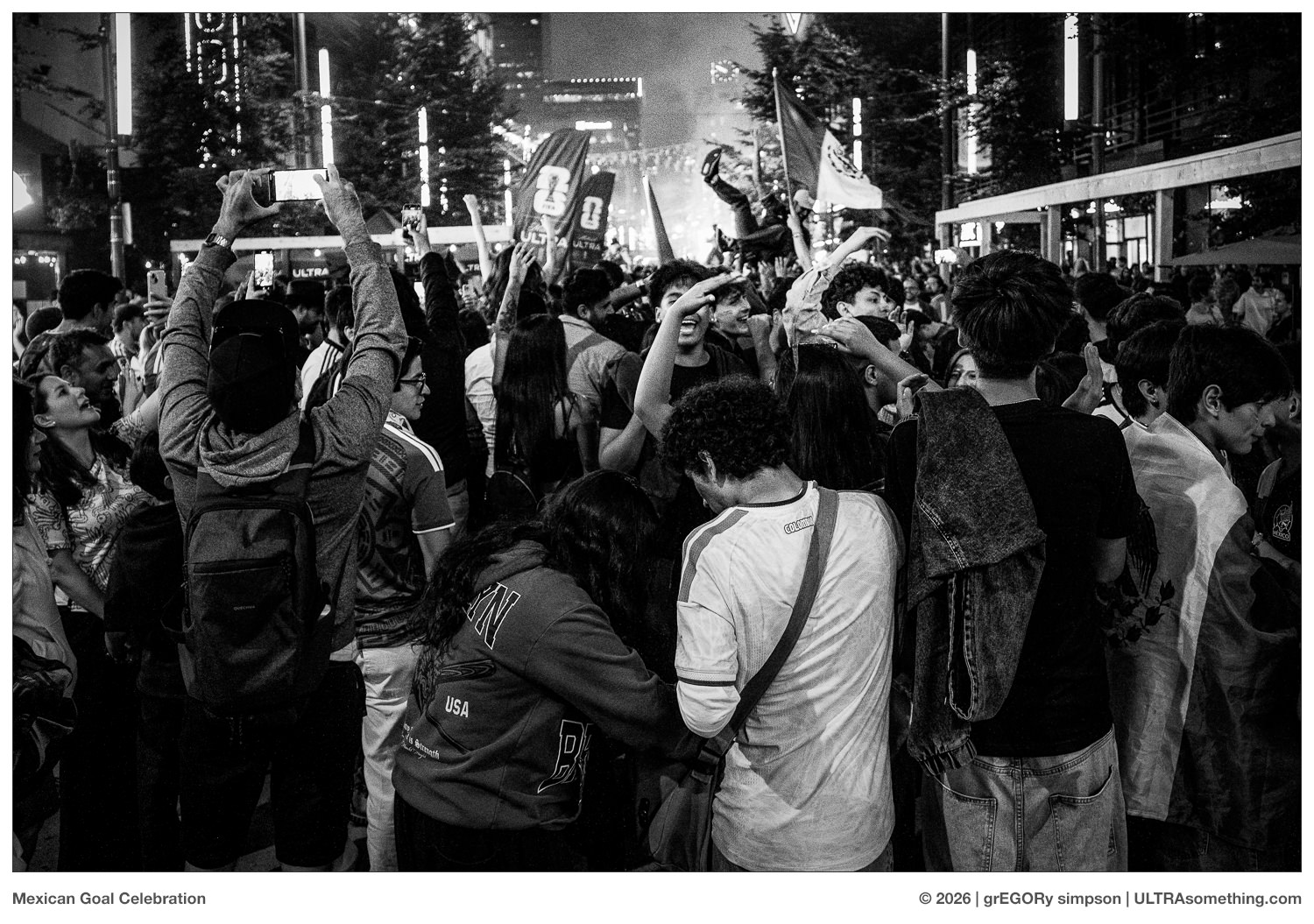
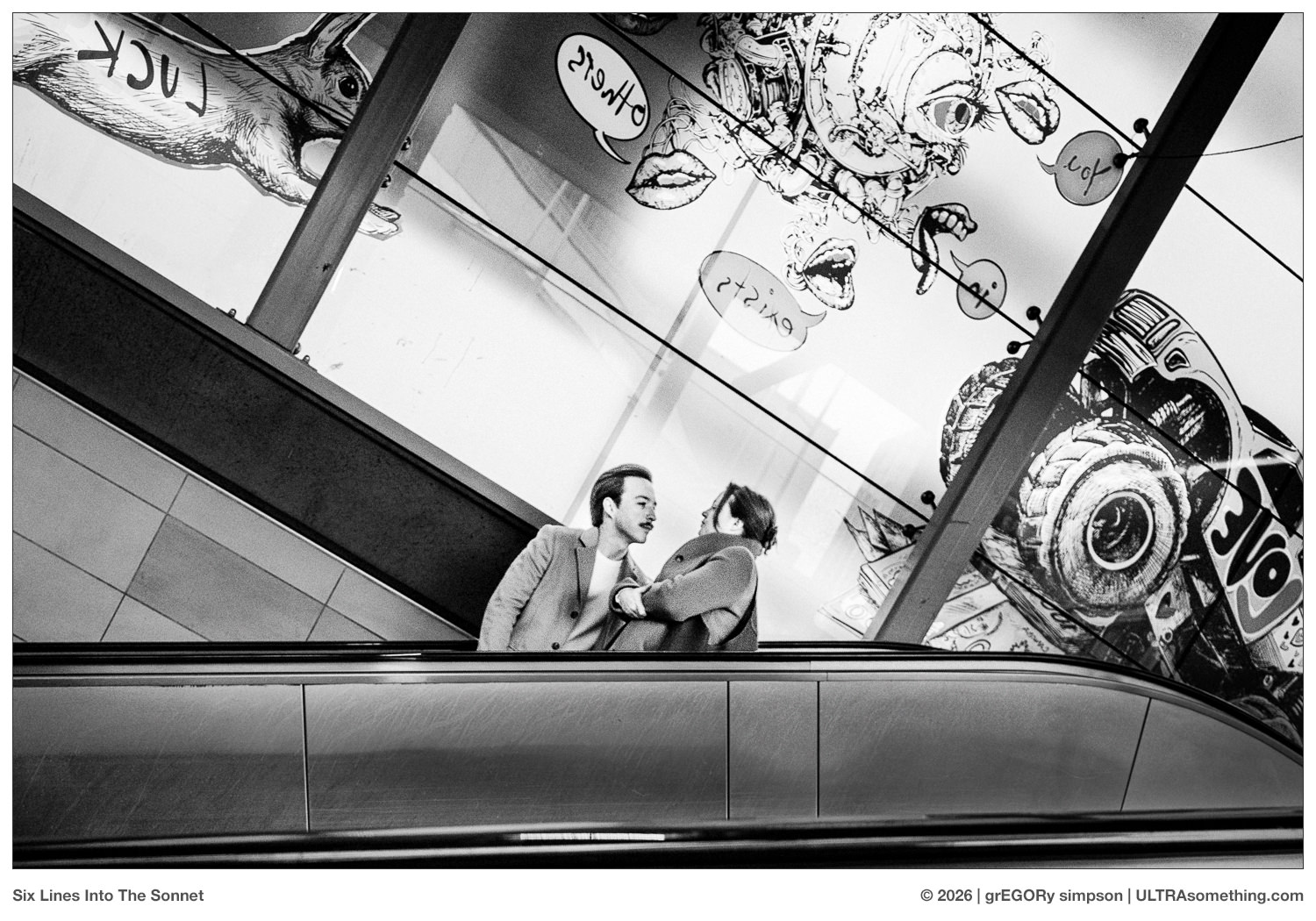
“One of Those Awkward Moments” and “A Poke In The Eye” were both shot with a Leica M Monochrom (Type 246), fronted with a Leica 21mm f/3.4 Super-Elmar-M lens. “Scramble!” was shot with a Widelux F7 panoramic film camera on Kodak Tri-X, exposed at ISO 400 and developed in HC-110 Dilution H.
REMINDER: If you find these photos enjoyable or the articles beneficial, please consider making a DONATION to this site’s continuing evolution. As you’ve likely realized, ULTRAsomething is not an aggregator site — serious time and effort go into developing the original content contained within these virtual walls.