Japanorama.
One minute, I’m engrossed in the dreariness of paying bills. One second later, the word “japanorama” is the only thought in my head. It entered my consciousness as unexpectedly as a lightning bolt on a sunny day. I heard it as clearly as if someone had shouted it in my ear; I saw it as distinctly as a neon sign in the middle of a cornfield at midnight.
Fully cognizant that both Albert Einstein and Nikola Tesla credited their ideas to a similar sort of otherworldly inspiration, I took the word as a sign. Since I would be travelling to Tokyo in a couple of months, “japanorama” must obviously be a suggestion — a sort of verbal shorthand instructing me to leave my small and sensible film cameras at home, and instead lug one of my big ass panoramic cameras across the Pacific. I’ll admit the idea did seem a bit daft, but who am I to argue with divine intervention?

Originally, I considered satisfying my commandment with the Hasselblad Xpan. After all, the Xpan sports impeccable fidelity, employs rangefinder focusing, and can be switched out of panoramic mode should the scene require. To a pragmatist, the Xpan would be the ideal choice to fulfill the japanorama mandate. Apparently, I ain’t no pragmatist.
Because, sensible choice that the Xpan might be, it just doesn’t put the “o-rama” in “pan-o-rama.” With its 45mm lens mounted, the Xpan has a 71 degree horizontal field of view. My Leica M, with its 21mm lens, shoots a wider horizon than that! Even if I won the lottery and secured enough capital to purchase a 30mm Xpan lens, the combination would record “only” a 94 degree width. But my Widelux F7? Now there’s a camera that can deliver the “o-rama” — 126 degrees worth! Surely this would please whichever god, martian or dissociative identity chose to plant the japanorama idea in my noggin.
But sadly, once I actually arrived on Japanese soil, I discovered that my taciturn source of divine inspiration was substantially less divine than either Einstein’s or Tesla’s. Each morning I would set out on foot, and by the end of the day, 20km would have passed beneath. Slinging a Widelux F7 around my neck, while carrying a Leica M Monochrom in hand, while shouldering a bag of lenses, film, a pocket wifi device, extra batteries, an iPhone, and various bits of flotsam and jetsam — well, it was simply too exhausting.
So the Widelux kept getting left behind. In fact, the only times I used it were when I knew I wouldn’t venture more than a couple kilometres from my room.

Curiously, in spite of its spartan use, I think the Widelux is an ideal camera for Tokyo. Had it been my only camera, I would likely have been completely satisfied. But since I was also packing several other cameras (which were digital, and thus necessary for publishing a daily travelogue), the Widelux was often odd “man” out.
So I’m rather certain I failed miserably at the task dictated by my divine guide. What’s more, I’m fearful that I might have misinterpreted it completely. After returning home from Japan, I chose to google “japanorama” and discovered that it’s the title of a BBC series about Japanese culture. Maybe I was meant to watch this series and not, as I originally believed, carry a Widelux around Tokyo? It’s not like divine intervention has a particularly intuitive user interface. So, in hopes of making amends (and possibly avoiding any cosmic smiting), I’ve decided to go ahead and publish a few of the Widelux shots, which I’ve combined into a small vBook. Hopefully, the next time I’m presented with a supernatural command, it’ll arrive in the form of a complete sentence, and not just a single word.
©2016 grEGORy simpson
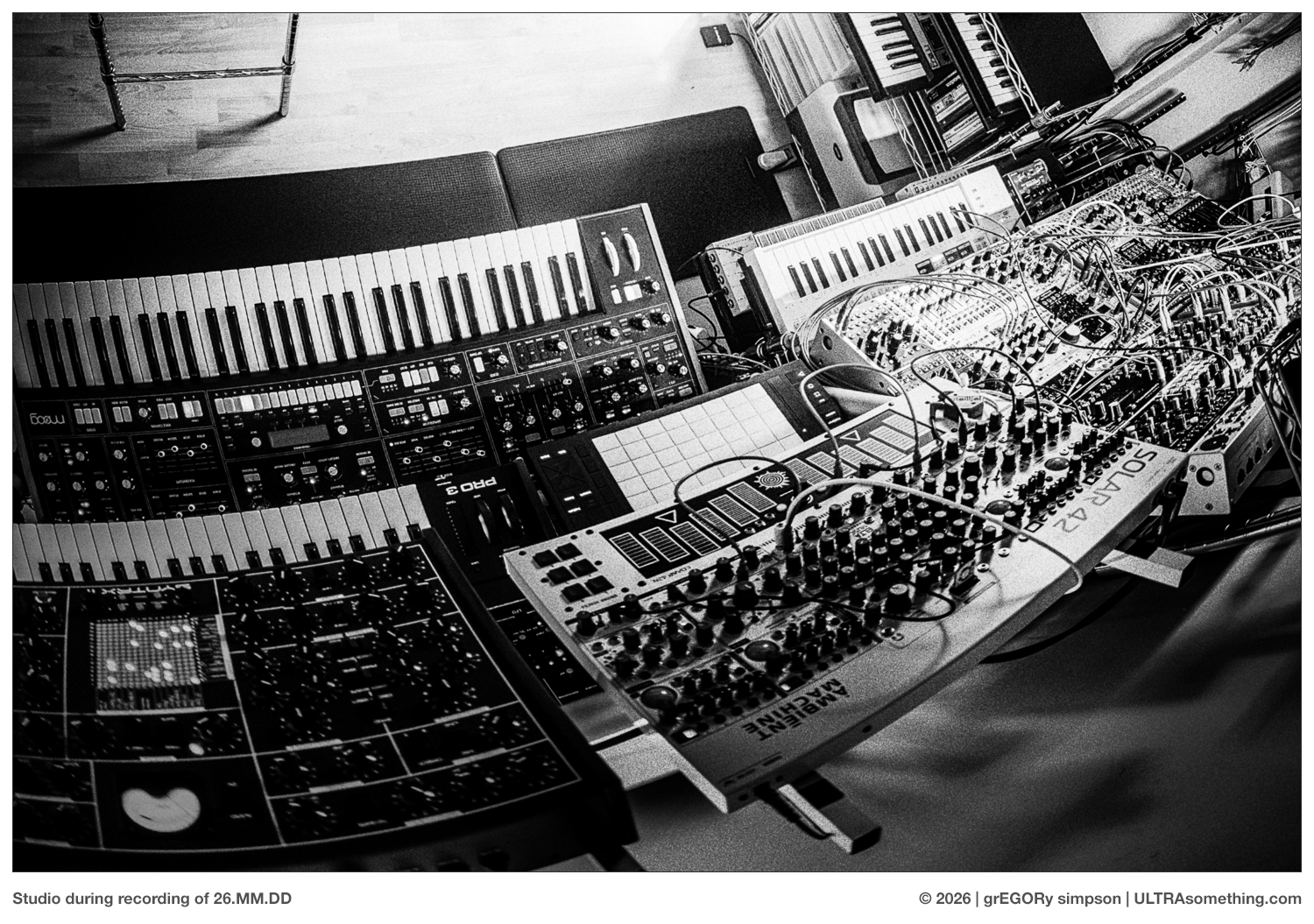
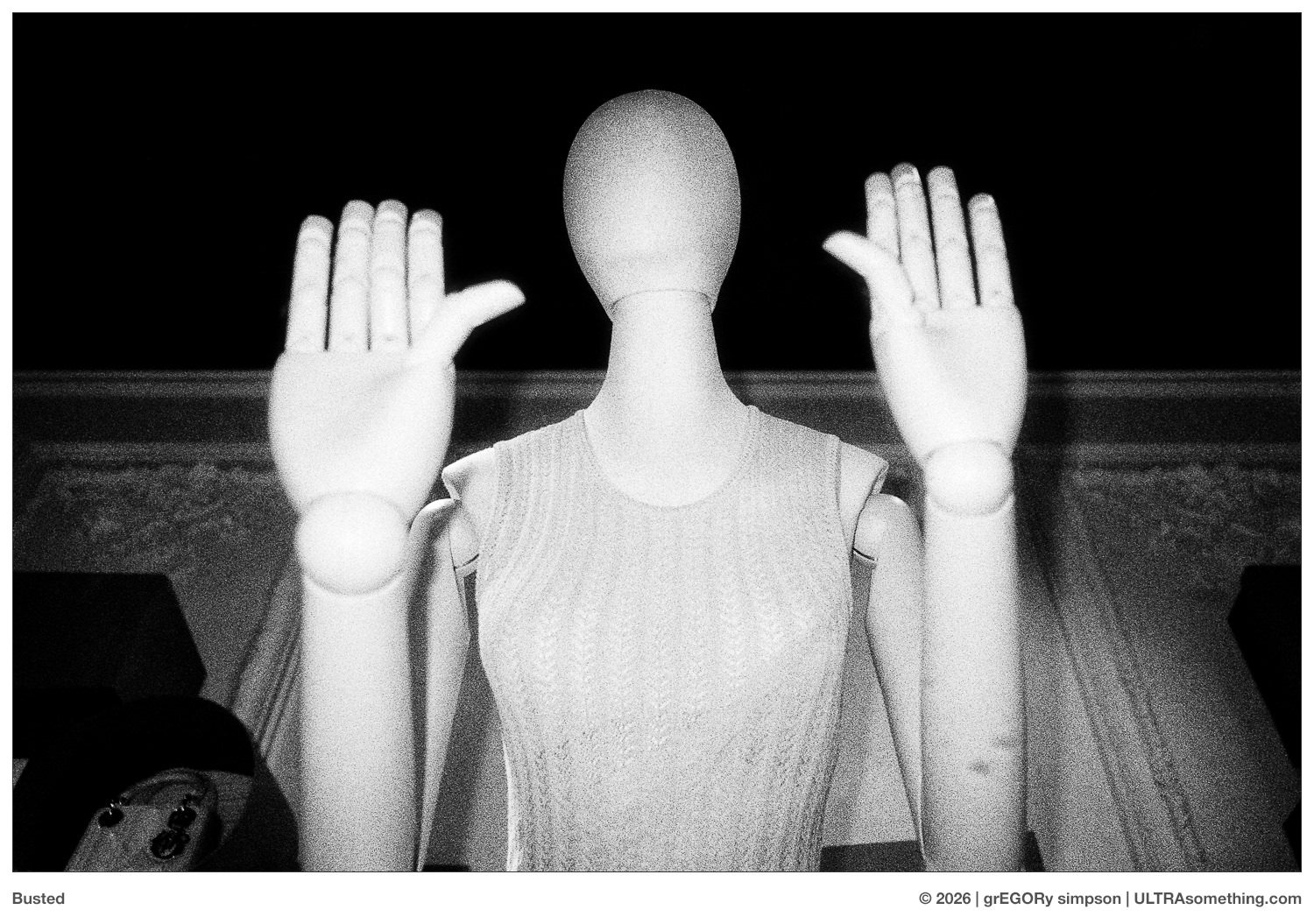
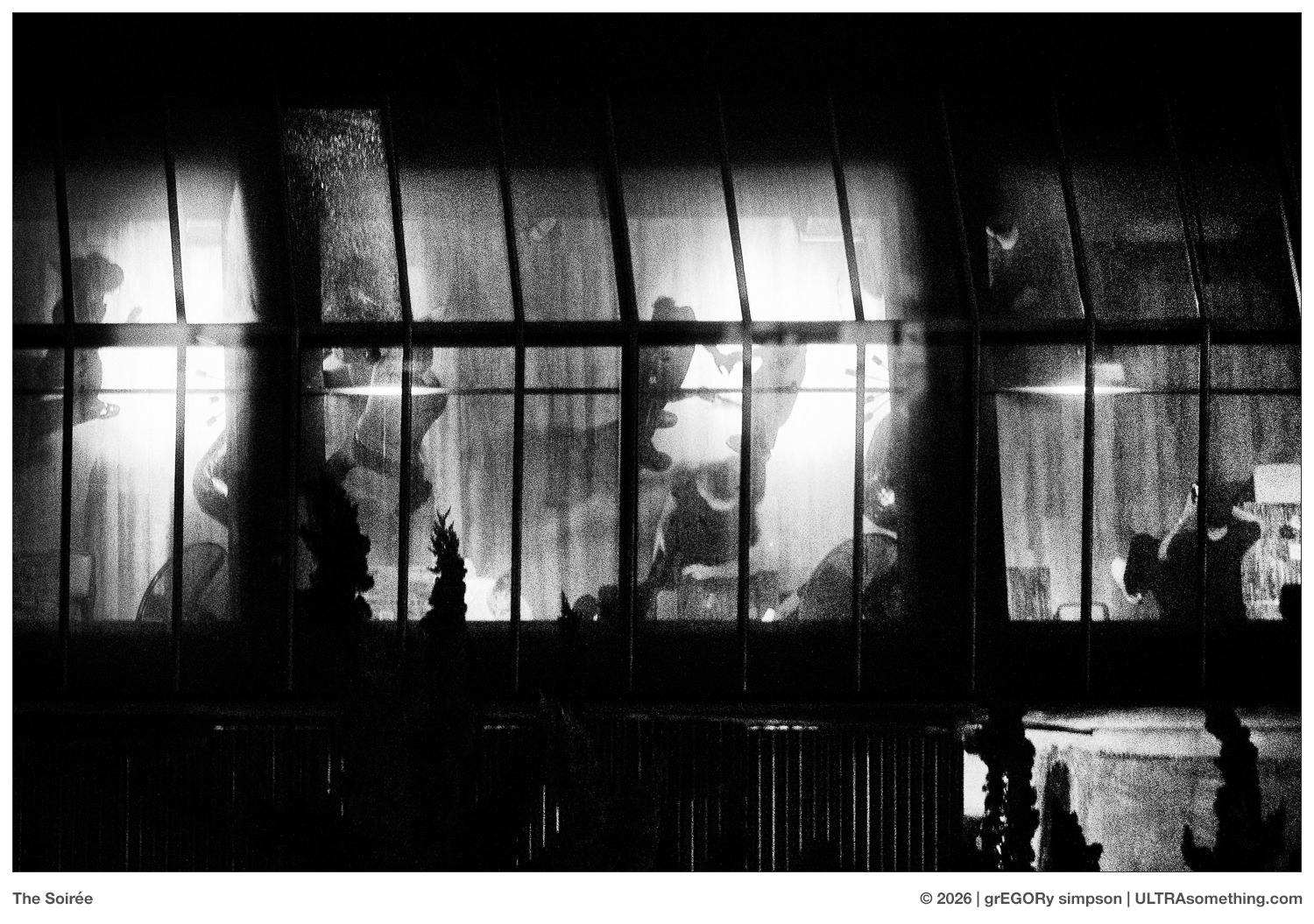
ABOUT THE PHOTOS: All photos were shot with a Widelux F7 at ISO 400 on Kodak Tri-X, and developed in HC–110 (dilution H). Music was recorded in Ableton Live, using mostly an assortment of hardware synthesizers — a dab of Arturia MiniBrute, a touch of Dave Smith’s Pro 2, and a whole lot of eurorack modules (the bulk of which are Vancouver’s own Intellijel modules). The piano track is the lone software-based instrument, coming courtesy of Native Instruments’ Komplete. As always, the whole concoction was baked in Apple’s Final Cut Pro X oven.
REMINDER: If you find these photos enjoyable or the articles beneficial, please consider making a DONATION to this site’s continuing evolution. As you’ve likely realized, ULTRAsomething is not an aggregator site — serious time and effort go into developing the original content contained within these virtual walls.