I’ve often been mistaken for a lens snob. Readers point to my penchant for Leica rangefinders, then jump to the “snob” conclusion without so much as straining a groin muscle. The reason, of course, is that Leica manufactures some of the best (and most expensive) optics in the world. So if I shoot Leica rangefinders, I must be doing it for the lenses, right? Wrong.
In fact, out of the 15 lenses I currently use with my Leica M’s, only two of them were designed and manufactured by Leica in the 21st century. Many date from the 1950’s, 1940’s and even the 1930’s.
What does this tell us? It tells us that what I really am is a lens addict. But a lens snob? Hardly. Seven of my 15 lenses actually use Leica’s pre-1954 thread-mount standard. And of those same 15 lenses, five of them aren’t even Leicas. What sort of lens snob would own so many non-Leica lenses? And let’s not forget that the one and only time I was ever mentioned by Popular Photography was for writing an article in which I described stabbing a piece of gaffer’s tape with an X-Acto™ knife and using it to take photos.

For me, flaws bring character to a lens. And choosing the right lens is as much about matching a particular character to a particular subject as it is about focal length.
Which is why I was both intrigued and excited when Lomography announced their new LC-A Minitar–1 Art lens for Leica’s M-mount. It’s a repurposing of a 35 year old, much-loved and rather significantly flawed optic — one which originally adorned the quirky, cultish, Russian-made Lomo LC-A camera that started the whole Lomography “trend.”
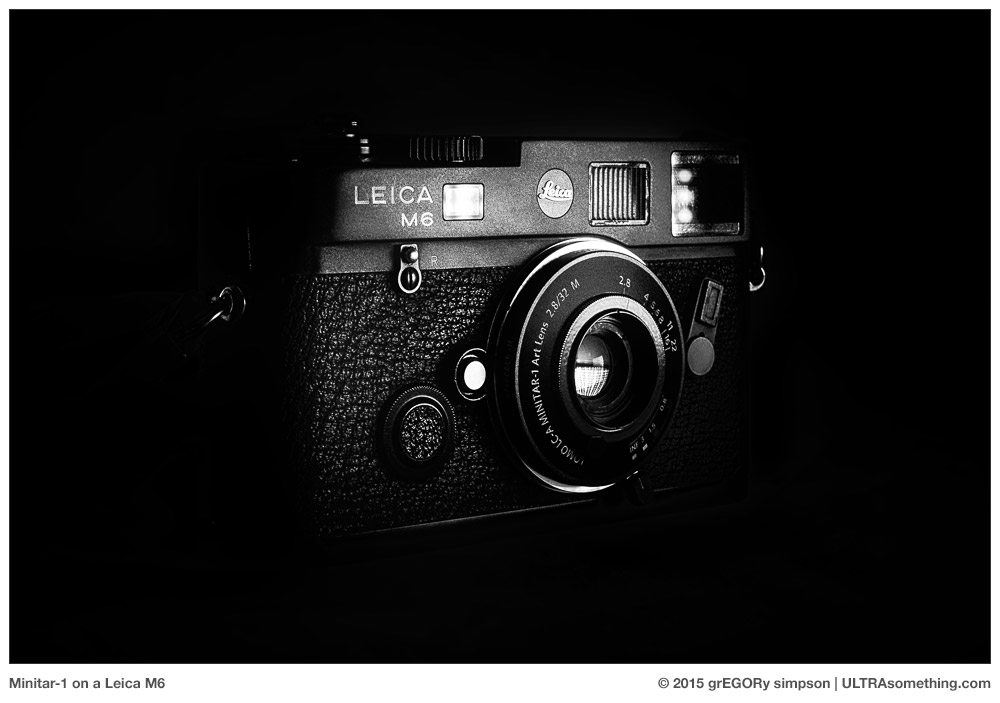
The Minitar is a 32mm f/2.8 pancake lens that, unlike many current Lomography products, uses actual glass lens elements. The focal length is, I suppose, perfect for those who think 28mm is too wide and 35mm is too long — but I found its “tweener” status more limiting than liberating.
As with most Lomography products, the packaging is beautiful and the accompanying literature is an inspired masterpiece of marketing B.S. Unlike its homonym, this Minitar has more than just the head of a bull. My advice? Should you actually purchase one, don’t bother to read any of the enclosed literature — because once you handle the actual lens, you’ll be convinced they shipped you the wrong one. They didn’t.
The first thing I noticed about the Minitar was its size. This lens is even flatter than my 1946 Leitz 3.5cm Elmar thread mount — which is (and continues to be) my go-to lens whenever I’m looking to go low profile. Sadly, its size may well have been the last unqualified “good” thing I noticed about the Minitar.
While twirling the lens about and marvelling over its thinness, I immediately noticed a rather disconcerting design choice — the aperture blades are fully exposed on the back side of the lens. The only thing separating the blades from an errant finger, key or pencil is… nothing! You know how some people attach a string between their lens barrel and front lens cap so that they don’t lose the cap? Well, this is the first lens I’ve ever seen that might encourage someone to permanently tether the rear lens caps to the barrel — because without that cap, you’re sitting on an accident waiting to happen.
Turning the lens around, I’m presented with a design somewhat reminiscent of my old Leitz thread mount lenses. Specifically, there’s a tiny aperture tab, which rotates around a very small central lens element that, itself, requires the once popular 22.5mm x 0.5mm filter size. Unfortunately, “once” corresponds to “around the time Jimmy Carter was sworn in as President of the United States.” So look forward to spending many a weekend scouring garage sales in hopes of scoring some old filters that might actually fit your new Minitar.

Looking closer at the front of the lens reveals another curious design choice: there is no Depth of Field scale on the lens. Considering it’s a manual focus lens, and one that Lomography touts as being “ideal” for scale focussing, isn’t it a rather obvious oversight to omit DoF markings? Particularly since the oddball 32mm focal length practically guarantees no one will have any first-hand experience with that particular focal length’s Depth of Field characteristics?
Further contradicting Lomography’s assertion that the Minitar is built for scale focusing, is the fact there are only four distance demarcations on the lens: 0.8; 1.5m; 3m; and infinity. There is a slight detent at each of the two middle distances — though the detents on my copy are so subtle and so sloppy that they require the finger sensitivity of a safe cracker to discern whether they’re engaged.
Not that any of this matters — because the distance markings seem to be more “suggestive” than accurate. For example, at the minimum focus distance of .8m, I measured the actual plane of focus at around .73m — a distance more in keeping with the traditional minimum focus distance of a typical M-mount lens. When carefully set in the “deepest” part of its 1.5m detent, I found the optimum plane of sharpness to be closer to 1.3m. At the 3m detent, I was actually unable to determine the true plane of focus — the lens was simply so soft and resolving so poorly that I couldn’t tell whether the subject was any sharper at 2.75m or 2.5m than it was at 3m. To Lomography’s credit, however, they did seem to get the infinity setting about right.
Considering the fact this lens is actually rangefinder coupled, I find it somewhat curious that Lomography bothered to build in any distance detents at all. Distance detents are the most help on lenses that are not rangefinder coupled — since the detents allow you to focus by feel while framing your subject. My 25mm Voigtlander, for example, has distance detents at 1m, 1.5m and 3m — but since that lens is not rangefinder coupled, the detents are actually very helpful (not to mention easily found and accurate).
You might think, “OK, so the lens doesn’t need detents, but so what? It’s not like their presence causes any issues.” That might be true in theory, but it’s not the Minitar’s reality. And this is because, according to my little plastic protractor, the Minitar’s rotational focussing arc is only 40 degrees. That’s right, a mere 40 degrees is all the rotation that separates .8 meters from infinity. As a point of reference, consider my Leica 28mm lens, which has approximately a 115 degree arc to cover this same range. A focus arc of 40 degrees means that the slightest nudge of the focus ring has a significant effect on focus distance — resulting in a lens that’s somewhat difficult to focus accurately. So the inclusion of two wide, sloppy detents within this 40 degree arc means, essentially, that you’re robbed of even more focussing accuracy. So what we have are detents that are neither accurate nor needed, that don’t even function very well as detents, and that rob the lens of the additional focusing accuracy it so sorely lacks.
Moving on…
Let’s talk about aperture markings. While the Minitar’s distance markings might be “approximate” at best, its aperture scale is a work of pure fiction. When I first started using the Minitar, I set exposure the way I always do — manually. But I soon realized every photo I took was drastically overexposed. Thinking, perhaps, that my eye was out of calibration, I pulled out my light meter and checked the scene before me. It measured 1/125s at f/8 and ISO 400. So I obediently set the Leica Monochrom to ISO 400 and its shutter speed to 1/125, while setting the Minitar’s aperture to f/8. The result? A brilliantly white frame of lustrous overexposure. In order to expose this scene properly, I needed to set the Minitar to its narrowest aperture (f/22). Yeah, you read right. The f/8 aperture demarcation on the Minitar was off by 3 whole stops! I tried measuring a darker (f/4) and less contrasty scene, and in this case the Minitar was only off by 2 stops — requiring that I instead align its aperture to f/8 in order to achieve proper exposure. At this point, I didn’t bother with any additional tests — I simply started using the Minitar with the camera in auto exposure mode, since the lens’ preposterously misguided aperture scale prevents any other means of exposure.

Alright. Just because the lens’ distance and aperture calibrations are a total disaster, that doesn’t necessarily mean it’s a bad lens. After all, I can work around its focus issues by using the rangefinder (or Live View), and I can ignore its fantastical aperture markings by simply letting the camera pick the exposure.
So how does this lens perform? The answer to that question depends on who you are and what you expect of it.
Personally, I welcome a few flaws when it comes to photography — whether they result from the gear I use or the techniques I employ. Vignetting? Bring it on! Soft edges? Who cares! Low resolution? Flaring? Now it’s a party! And I’m happy to report that all these properties are readily apparent in the Minitar. Heck, they’re actually the reasons for which one would purchase this lens.
But here’s the thing: We all have our own “line” — some level at which a flaw is no longer a “thing of beauty,” but simply a “defect.” Many of today’s photographer’s draw this line just south of “technical perfection.” Me? My line’s way down ‘round the Antarctic Circle. A lens has to be pretty darn flawed before it annoys me. Consider, for example, my 1937 Leitz 9cm Elmar — a tremendously ugly lens I refer to only as “the pipe fitting.” This lens is so lacking in contrast that I can shoot it in the harshest of midday sun, yet it renders only minute luminosity differences between highlight and shadow regions. It’s about as milky as a lens could be, but I still love it. So yeah, my line at which a lens becomes “unacceptable” is absurdly liberal. And yet, the Minitar crosses it.
It’s nothing I can really quantify. Lomogoraphy does a good job of embracing and marketing the idea of low fidelity, which has the effect of insulating them from criticism. If you think a particular Lomography product is too grungy, well, you’re just not hip enough to “get” it. So I’ll readily admit, here and now, that I’m not hip enough to “get” the LC-A Minitar–1.

While I do really like its drastic luminance vignetting (which, I imagine, is what a micro four-thirds lens would deliver if mounted to a full frame camera), I find its commensurate edge softness much less appealing. Darkened edges are one thing, but edge detail that’s indistinguishable from ectoplasm is something else entirely. This is a lens that basically demands your subject be in the centre of the frame — but even then, that subject is going to be a bit fuzzy.
Now, truth be told, I could probably learn to forgive this lens of its defects. After all, I forgave the pipe fitting of its most dubious characteristics. But here’s the thing — the Minitar is a new lens. It’s not a dusty old relic that’s changed hands 100 times at weekend camera swaps. It’s not a lens you buy with coins you’ve collected from between your sofa cushions — it’s a lens that demands you actually pull out your credit card, order online, and wait many months for Lomogoraphy to build and deliver one to you. And because of this, one can’t judge it as forgivingly as, say, an old 1930’s Leitz lens. An 80 year old lens has earned its flaws. What has a brand new Minitar earned?
When I combine its rather disappointing optics with its rather poorly engineered mechanics and slap on a premium price tag, I’m left with no other choice but to question my sanity for having purchased it.
Try as I might, I simply couldn’t manufacture any love for the Lomography LC-A Minitar–1 Art lens. Curiously, the camera from which it came — the LC-A — has legions of fans, so I’m sure I’ll be fielding an angry email or two as a result. And that’s OK. Because, as I’ve always said, “there is no such thing as bad camera gear — only a bad match between the gear and the user.” And this lens is, alas, a bad match for me. But one really has to wonder: if the Minitar–1 isn’t a match for the low-fidelity, grunge-loving, serendipity freak that is me, then who exactly is it for?
Maybe I’m a lens snob after all.

©2015 grEGORy simpson
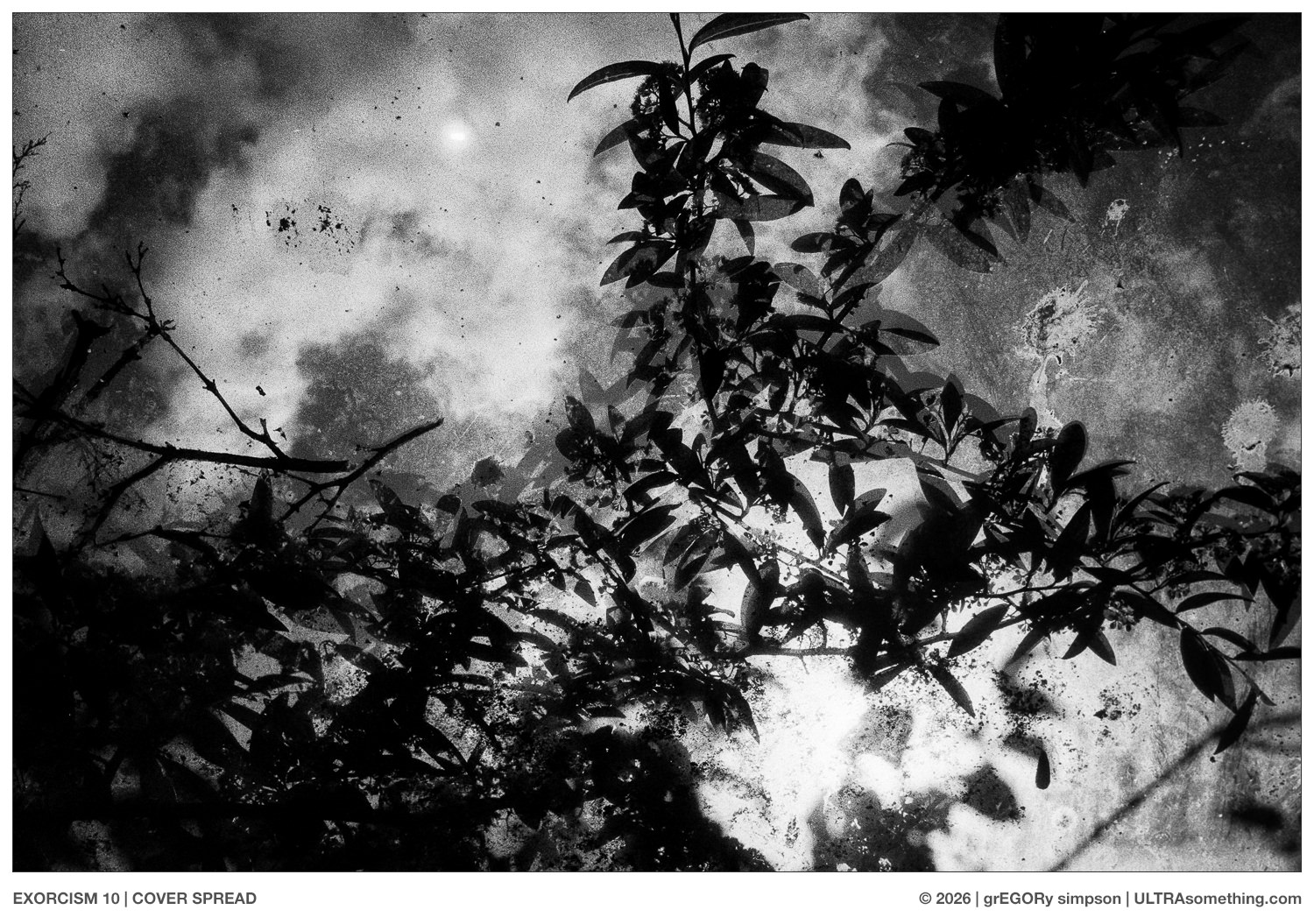
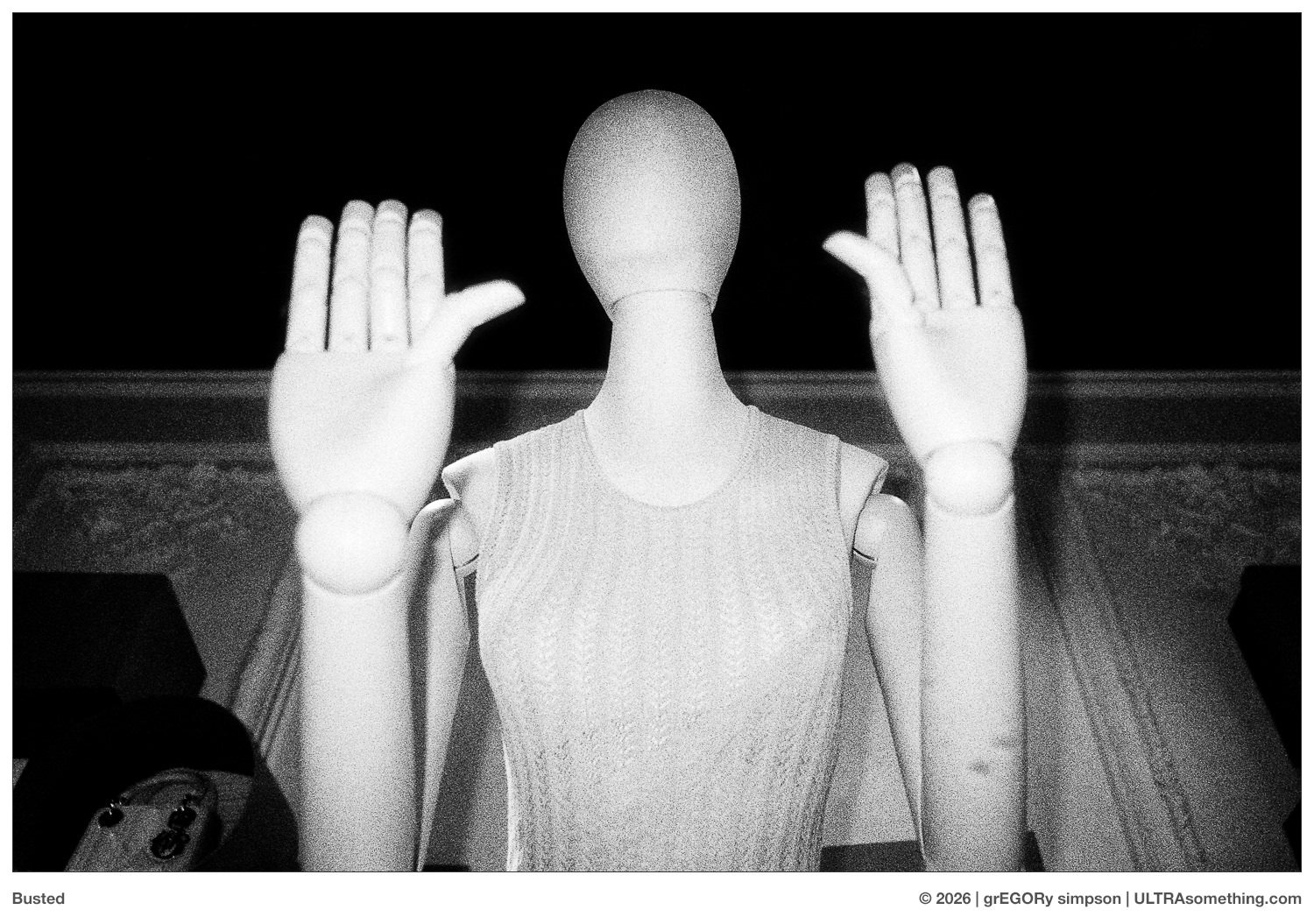
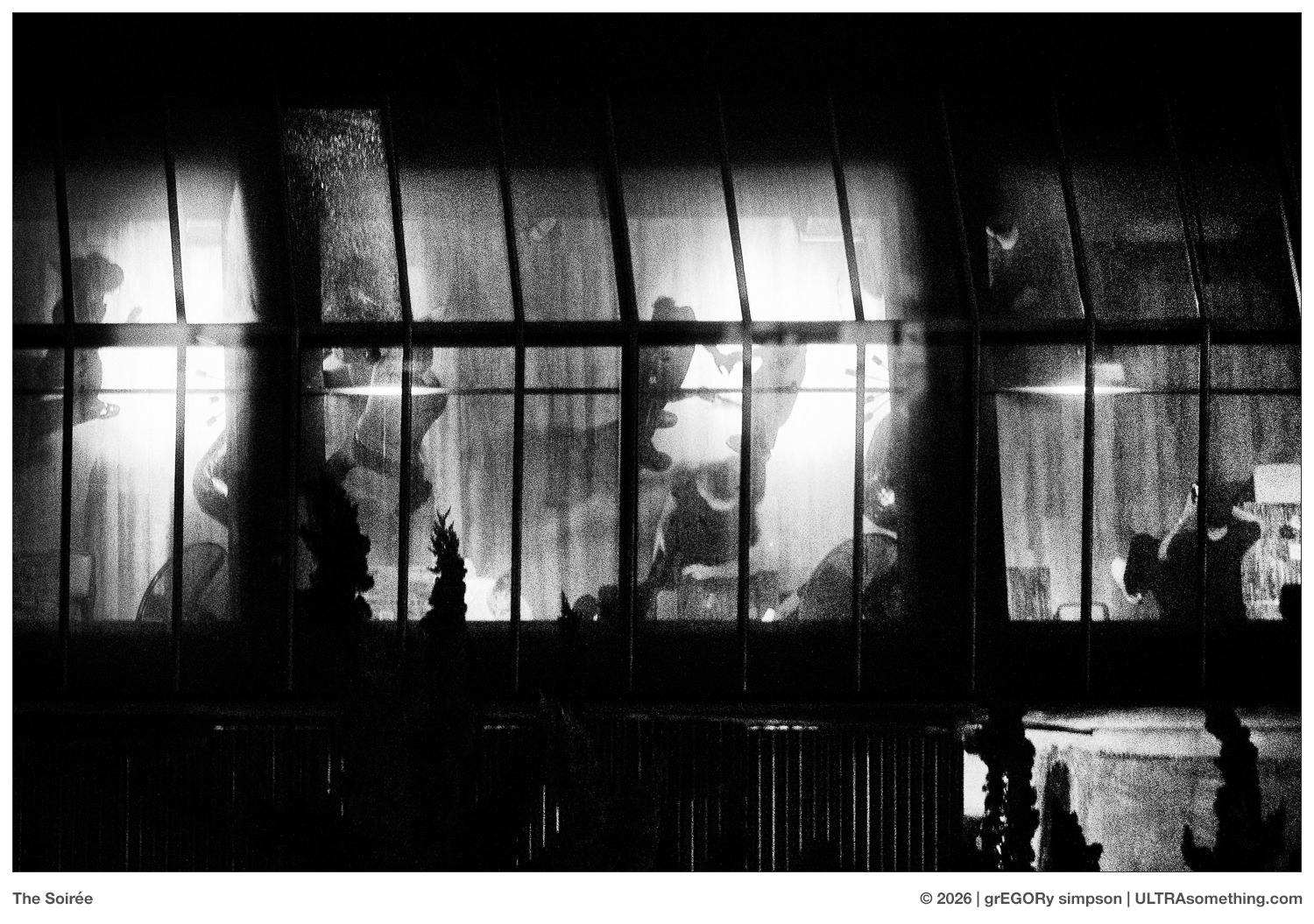
ABOUT THE PHOTOS: Other than the opening product shot, all photos were taken with the incongruous combination of a second generation Leica Monochrom-M (Type 246) and the Lomography 32mm f/2.8 LC-A Minitar-1 Art lens. All images were heavily post-processed because 1) I wanted the photos within this article to have a consistent appearance, and 2) I didn’t exactly have the highest fidelity files with which to begin. Frankly, should I ever shoot with this lens again, I’ll likely process the images with similar aggression — the lens sort of demands it, I think. Also, I’ll grant you that these aren’t the most inspiring images to have ever accompanied an ULTRAsomething article. I must admit to being somewhat anxious to get the lens off the Monochrom, lest I be stuck using the Minitar should an actual “keeper” shot come along.
REMINDER: If you find these photos enjoyable or the articles beneficial, please consider making a DONATION to this site’s continuing evolution. As you’ve likely realized, ULTRAsomething is not an aggregator site — serious time and effort go into developing the original content contained within these virtual walls. Normally, I’m a bit embarrassed to ask for donations, but in this particular case, I’m feeling rather keen to recoup some of the cash spent on this particular lens…