Anyone who chooses to thumb through the previous decade’s worth of ULTRAsomething articles will be faced with an incontrovertible truth — that a photo’s technical quality carries little (if any) weight in my evaluation of its acceptability. For me, a photo’s feel will always supersede its fidelity. So it probably seems paradoxical, if not downright criminal, that I have been tasked with testing each iteration of that über-fidelity wonder known as the Leica Monochrom.

The curious fact is that I am, in actuality, a technical guy — complete with an Electrical Engineering degree and a lifetime spent designing and developing electronic music products. So while I do possess the jaunty jargony jive to parse through a camera’s technical merits, I’m also aware they’re only a fraction of the camera’s overall gestalt. And ‘gestalt’ really is the best term to apply to the M10 Monochrom — a camera that relies as much on limitations as on fidelity to create a greater whole. Gone is the modern convenience of autofocus, elaborate AI-infused picture modes, video capabilities, and the ability to record any color other than grey. In its place is an all-new custom-designed 41-megapixel sensor of impeccable ability, and an ergonomic design aesthetic essentially unchanged (because it hasn’t needed to change) since 1954. That’s how you make a nice, hot, steaming bowl of gestalt soup.

This, the third generation of the Monochrom recipe, has inherited the M10 form factor and all the little niceties that product line delivers. It shaves a few mm of bulk off the once bloated digital body, and now features the quietest shutter I’ve heard on a Leica (and I have several old models of analog M and Leica IIIs). As with the second-generation Monochrom, Leica asked me to perform a detailed technical analysis — this time comparing image differences between the new version, its previous incarnation (the Model 246), and the current generation of color M10.

Unfortunately, due to some hiccups in customs, the camera arrived only two days before my scheduled trip to Tokyo. So the time required to perform the technical comparisons would be particularly tight. As the Monochrom’s battery charged, I hastily outlined what sort of controlled photos I would take in an effort to see how much, if any, additional fidelity Leica could squeeze out of this thing.
By the time the battery charged to 80%, Vancouver was engulfed in the darkness of night. I switched on the M10 Monochrom, snickered sardonically as I rotated the new ISO dial to 12,500, walked out onto my balcony and took a single, hand-held shot of the city using one of the slowest lenses I own — the Super-Elmar-M 21mm f/3.4 ASPH. I walked back into the office, popped the SD card into the Mac, fired up Lightroom, and got blown over like that guy in the classic Maxell Tape ad. There was seemingly no way the fidelity of a late night, high ISO shot could be this good. There was precious little noise, scads of detail, and oodles of malleable dynamic range. When I pushed the shadows so hard they resembled daylight, there was no visible banding. And what shadow noise did get amplified was a random, fine, and organic dusting.
I’d taken only one shot, and I already knew I was going to buy it. I didn’t need to run any comparison tests — I needed only to walk around the condo putting Post-It® Notes on things I’d have to sell in order to afford it. But just to be sure, I took the camera on a little walk around Vancouver that night. I checked the images on the Mac when I returned, and immediately opened a new pack of Post-It® Notes. This camera was going to be mine — whatever it cost. I’ve had 4.5 years of hands-on experience with the old Model 246, and I know exactly what it’s capable of and what its images look like — and there is no way it could have done what I’d just asked of the M10 Monochrom. The next night, in the world’s least-scientific comparison, I took the borrowed M10 (color) on a similar walk — it’s a nice camera, but for B&W photography, it wasn’t even in the same league.

I packed my bags for Japan — taking the new M10 Monochrom and two other digital cameras. I could have packed lighter, because the Monochrom was the only camera I used for the entire two weeks in Tokyo — though the other cameras did end up generously donating their SD cards to the Monochrom cause.

There’s nothing quite like photographing with a camera for two straight weeks to know whether or not it’s the camera for me. Even so, my experiences aren’t going to tell you whether or not it’s the camera for you. I can only say that the new M10 Monochrom has eliminated virtually every reservation I had about the old model 246.
My biggest beef with the older Monochrom was its thickness. It never felt right in the hand. The aftermarket Match Technical Thumbs-Up™ helped (as does the requisite soft-release), but its bulk never settled into my palm. And since a firm grip and a wrist strap are the only way I carry a camera, I was often painfully (literally) aware of the camera’s extra size and heft. On my first night out with the new M10 Monochrom, I kept trying to advance the film after each exposure. And for the first week in Tokyo, I would do the same — take a shot, then reach for the non-existent advance lever. Clearly, Leica has finally nailed the body, feel, and handling of a digital M. By the second week, I’d re-trained my thumb to not reach for the “film” lever after every shot — though with the analog and digital bodies now having such similar haptics, this means I’ll probably forget to advance the film when I shoot my analog M bodies.

And speaking of mechanical improvements, this new shutter is quiet. Wicked quiet. Almost leaf-shutter quiet. If discretion is your thing (and electronic shutters aren’t), you will not be disappointed. The whispered snick of its release sound is quieter than any of my M film bodies — by far.

The camera also appears more drizzle-ready than previous digital M cameras. There is no longer an open port for the EVF, nor are there holes for a microphone (since video capabilities have wisely fallen from the spec sheet). And while there has been apocryphal evidence of people gleefully shooting the previous Model 246 in the rain, I was never willing to test fate. If Leica wasn’t assigning an actual IP rating to its weather-sealing, I wasn’t risking it.
But with an assurance from Leica that the new M10 Monochrom will be fine “as long as it’s not raining cats & dogs” (their words), I braved shooting the Monochrom during a few “kittens & puppies” showers. Over time, I’m sure new apocryphal stories will appear on the internet from people claiming to have shot the M10 Monochrom in the driving rain, but here’s the thing: I live in Vancouver — the rainiest city in North America. Our “dogs” are newfies. For all I know, dachshunds might qualify as “dogs” in Wetzler, Germany. Then again, when it’s raining newfies & cougars here in Vancouver, I’m not all that inclined to go out shooting anyway — so it’s a bit of a moot point. Suffice to say, if I’m OK getting a little wet, the new Monochrom probably is too.
I should mention the ISO dial. It rocks. Of course all you M10 owners have known this for the past few years — but it’s new and exciting stuff for us Monochrom shooters. Oh, and the embedded JPG image is actually a useful size now. Thanks, Leica!
If these were the only changes, I’d undoubtedly be drooling over the new M10 Monochrom… and honestly, this is all I expected from Leica — that we would get the new M10 body with, basically, the same tweaked 24-megapixel sensor as before — much like what the M10 got when it was updated from the model 240.

But no. Leica chose to use an entirely new, custom-designed 41-megapixel B&W sensor, and let me tell you… there is NO going back to the M246 for me.
The sensor is simply remarkable. I was initially a bit skeptical of its higher resolution, since the model 246’s old 24-megapixel sensor already has a theoretical limit of approximately 80 lp/mm — far in excess of the 40 lp/mm resolution specs on their MTF lens charts. Leica’s more optically superior lenses (such as my oft-used 21 mm f/3.4) show around 80-90% transmission at 40 lp/mm on center, and about 50-60% in the corners. So it would seem obvious (and it’s visually apparent) that the lenses still have something more to give to an 80 lp/mm sensor. But the 41-megapixel M10 Monochrom’s sensor has a theoretical resolving limit of over 100 lp/mm. Would there still be anything left to extract at that resolution? I’m not one for conducting studio tests, so my experiments were rather rudimentary — I simply locked the cameras to a tripod and used various lenses to photograph distant buildings from my downtown balcony. Basically, when comparing images from the M10 Monochrom and the old M246, I wasn’t able to distinguish any extra detail. But with higher spec’d lenses, the details that did exist most certainly exhibited greater edge sharpness. In practical terms, this means the new M10 Monochrom will allow for ridiculously aggressive cropping, massive prints, or both — provided your lenses are up to the task of feeding this sensor all the data it can handle. It’ll be interesting to see what Leica’s lens designers do now that 40+ megapixels is gradually becoming the new norm.
I was also somewhat concerned all this extra resolution would mean blurrier photos. Granted, since I rarely bother to stop walking when I shoot, all my photos tend to be a bit blurry already — so my trepidation was admittedly rather benign. But what if I did want a sharply focussed photo? Would I be able to handhold the camera and still extract all that extra edge sharpness afforded by the new sensor? Basically, as we know, the higher the resolution, the more susceptible an image is to slight amounts of motion blur. The old “set the shutter speed to 1/f” rule was long obliterated. With the previous generation, I was more inclined to an absolute lower limit of 1/2f. With the M10 Monochrom, 1/4f is the more practical choice for handheld shots with maximum sharpness. Fortunately, this new sensor actually exhibits much better shadow detail, lower noise, and improved high ISO performance, so the cautiously faster shutter speeds are easily compensated.

What’s even more important, is that Leica has somehow managed to increase the camera’s low light fidelity while increasing its pixel density. So, while the M246 and M10 Monochroms both have the same recommended maximum speed of ISO 12500, the new model actually delivers impressive and downright stunning results at this setting. Whereas, frankly, I considered anything north of 6400 to be a “push mode” in the old M246. And speaking of push modes, both cameras allow for an ISO 25,000 push, with the new M10 Monochrom also allowing 50,000 and 100,000 options. I sometimes shot the new M10 Monochrom at ISO 25,000, and was perfectly satisfied. ISO 50,000 is usable if you don’t manhandle the image too truculently in post-processing, but at 100,000 there is simply too much banding for it to be your first choice should you wish to photograph infinite voids in deep space.
It’s still sometimes possible to make patterns appear in the noise floor of an M10 Monochrom file when you rotate or geometrically distort an image. Anyone who’s seen this with either of the earlier Monochroms will continue to see it with the new M10 version. The extent to which these patterns are visible has always been dependent on a RAW converter’s interpolation algorithms. For example, when I use Lightroom to render a file, I see more pattern noise than when I use Exposure 5. The good news is, the M10 Monochrom goes an extra stop or two beyond the M246 before it starts to visibly band, and any noise patterns that do result from geometric distortion are finer and easier to correct. If I’m going to aggressively shove pixels around on a high ISO file, I’ve found that a single application of Photoshop’s Despeckle tool (applied before the editing process) is all that’s required to virtual eliminate any patterns from forming. As mentioned, other RAW converters may minimize the artifact, as does shooting in JPG. It’s a rather minor problem with many workarounds, and anyone shooting with an earlier version of the Monochrom who hasn’t noticed it previously, probably won’t notice it now.

In hopes of making this article appear more fair and balanced, I actually strained a brain muscle trying to think up something ‘negative’ to write. I suppose one thing I find a bit irksome is that the camera’s GPS system requires that the Visoflex electronic finder be attached to the body. This is fine if you’re a Visoflex user. But mine sat on the table in my Tokyo Airbnb the entire time I was out shooting — which means I need to rely on my memory to identify the location of each photograph. And let’s just say I’m not as young as I once was.
At this point, there’s no reason for me to “sell” readers on the advantages of rangefinder cameras for the sort of candid, reactionary photography I prefer. Nor, after two previous iterations of Monochrom, is there any more reason to discuss why shooting a black & white camera is so liberating, and why its images are so much higher fidelity. If you’re not already in agreement, this article won’t convince you. But if you are, then you likely have only one question: “Is the M10 Monochrom the camera of my dreams?”

And the answer to that question depends on how detailed or colourful you dream. If you already have a second generation M246 Monochrom, the decision to update depends on how you answer a few additional questions:

1) Are you reasonably happy with the handling and ergonomics of the M246? If yes, then the M10 Monochrom’s additional benefits (thinner body, dedicated ISO dial, quieter shutter, fewer moisture entry points) might not be important enough to warrant the extra expense. If no, these physical updates alone might just sway you.

2) Do you crop aggressively and print big? If no, you’ll likely see little actual benefit to having a sensor with 75% more pixels than the M246. The old model’s 24-megapixel sensor is excellent, and it already resolves the vast majority of detail provided by Leica’s exceptional lenses. So while the “wow factor” you’ll experience when you view a file at 1:1 resolution is exhilarating, the amount of extra hard drive space and computer processing time you’ll need to shove all those extra pixels around might not be. If you do crop aggressively (guilty) and/or print big, then the M10 Monochrom’s extra pixels (when fronted with a modern, high-calibre lens) will create a noticeably higher fidelity output than a resized version of a similarly cropped M246 file.
3) Do you frequently shoot at night, or in dark spaces, or in areas of very high contrast? If no, the sensor’s ability to extract another stop or two of Zone 1 detail (while simultaneously reducing the amount of visible banding in those zones) probably won’t justify the extra expense for those few times it does matter. You can always add a bit of random noise to the shadows in Photoshop, which will pretty much eliminate any banding or geometric patterns created by rotating or skewing an image. Sure, the old model 246 won’t have the same level of Zone 1 detail as the M10 Monochrom — but technically, there isn’t supposed to be any detail in that zone anyway. However, if you do shoot frequently in the aforementioned conditions, you’ll appreciate making far fewer trips to Photoshop to dither away any banding issues, and you will marvel at being able to push those Zone 1 details comfortably into Zone 2, if not Zone 3.

As far as deciding between the color version of the M10 and the M10 Monochrom, I can only suggest one thing — if you’re even waffling about this, then perhaps you’re not quite the certifiably uncompromising B+W fetishist for whom Leica builds this. Obviously, with the M10 Monochrom you lose the ability to ever shoot in color — and if that matters to you, then none of the M10 Monochrom’s other advantages (i.e. cleaner shadows, better ISO performance, higher resolution) will matter to you nearly as much as seeing blue skies and green trees.

For me and my dreams, the new M10 Monochrom eradicates nearly every grumble I had with the previous model. So if there’s any way at all I can gather enough crap to sell on Craigslist, I’ll be buying one.

©2020 grEGORy simpson
ABOUT THE PHOTOS:
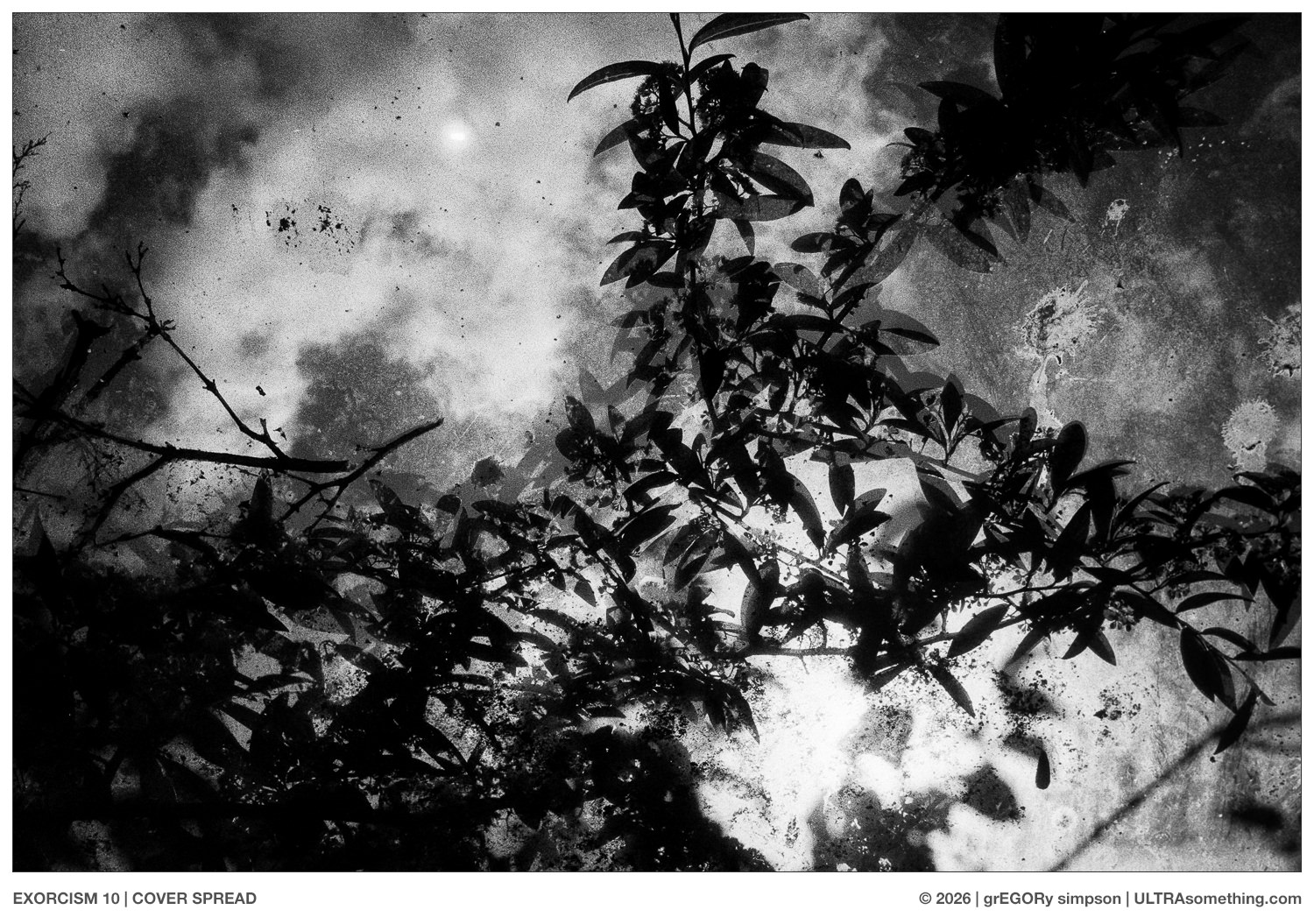
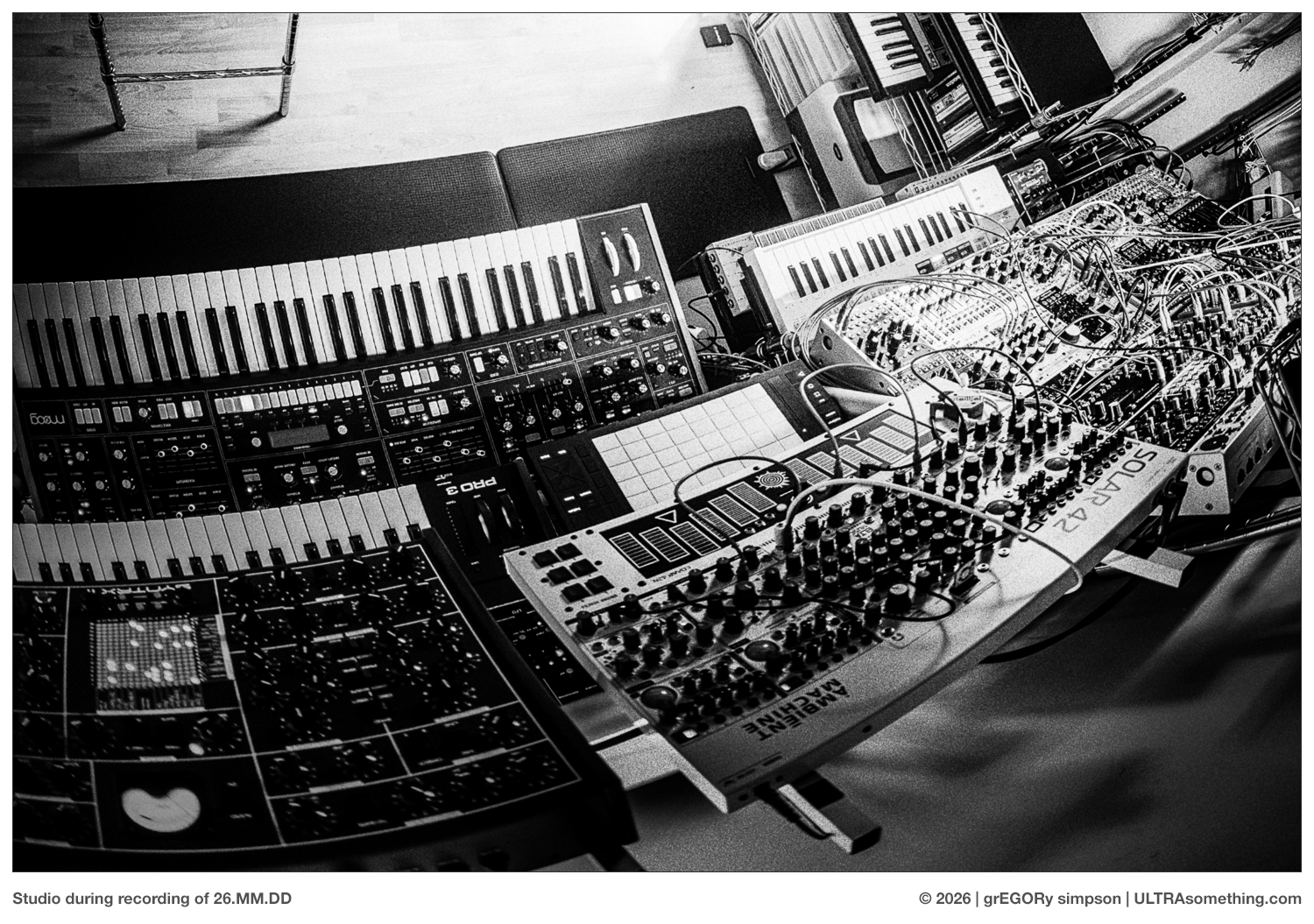
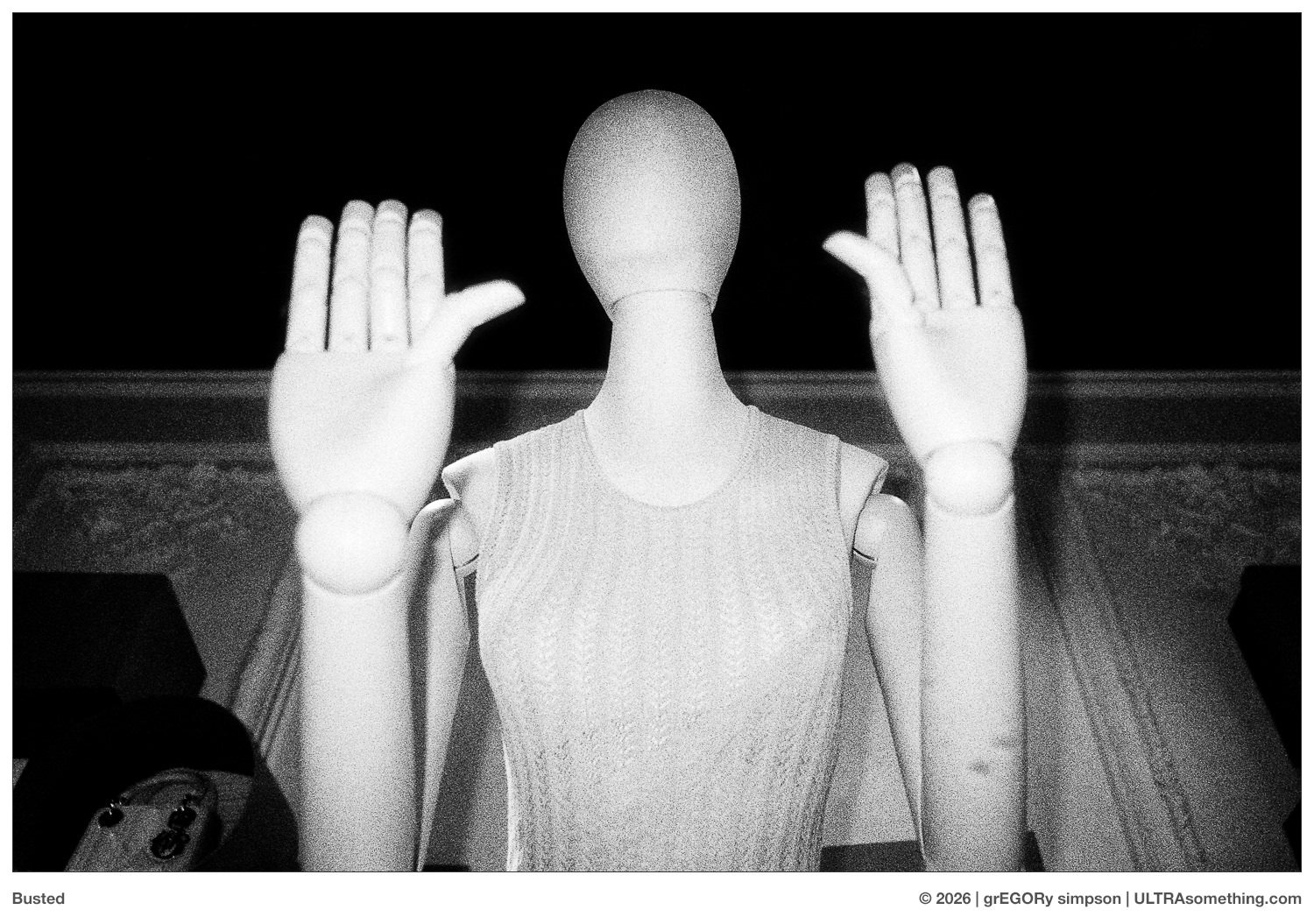
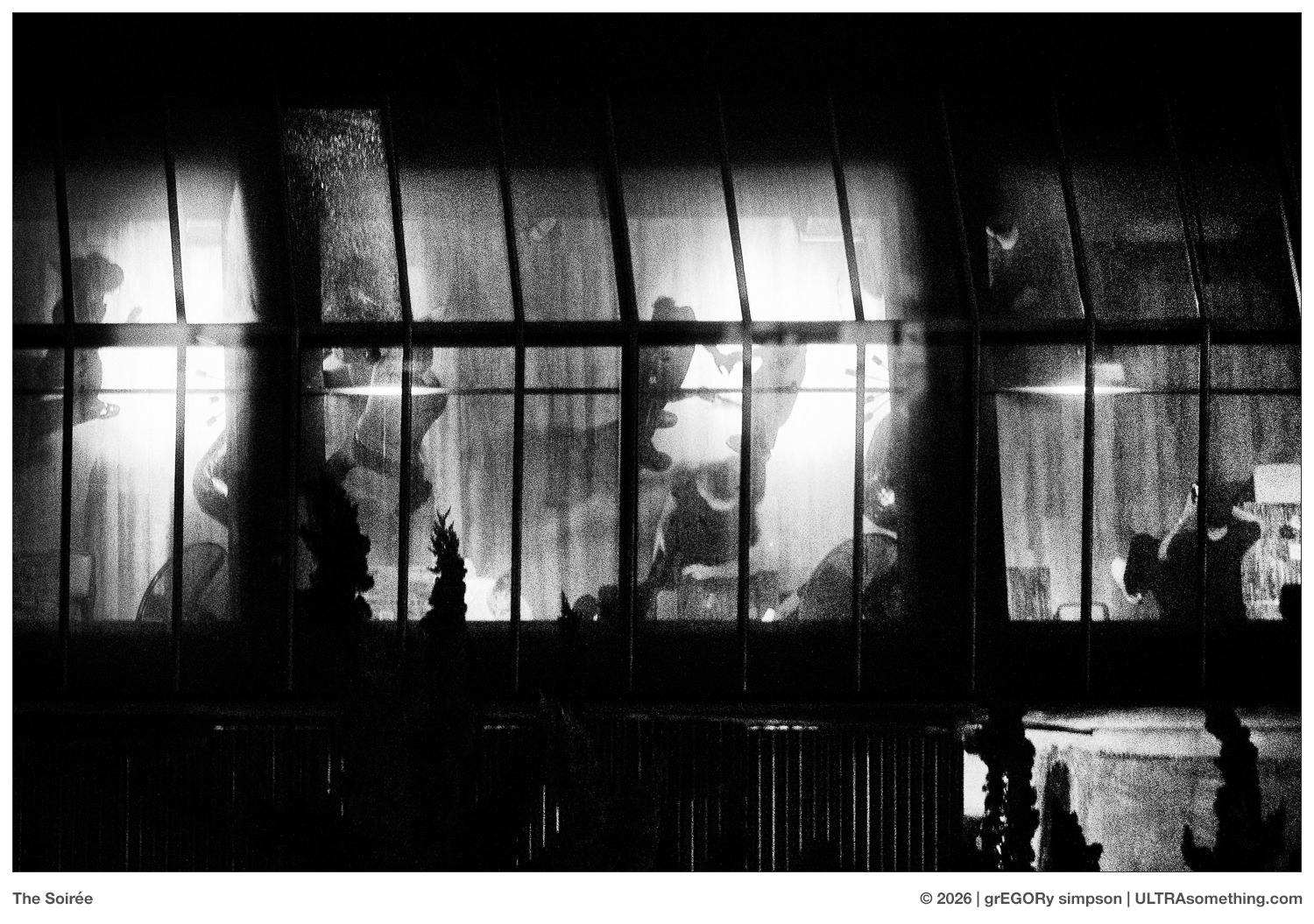
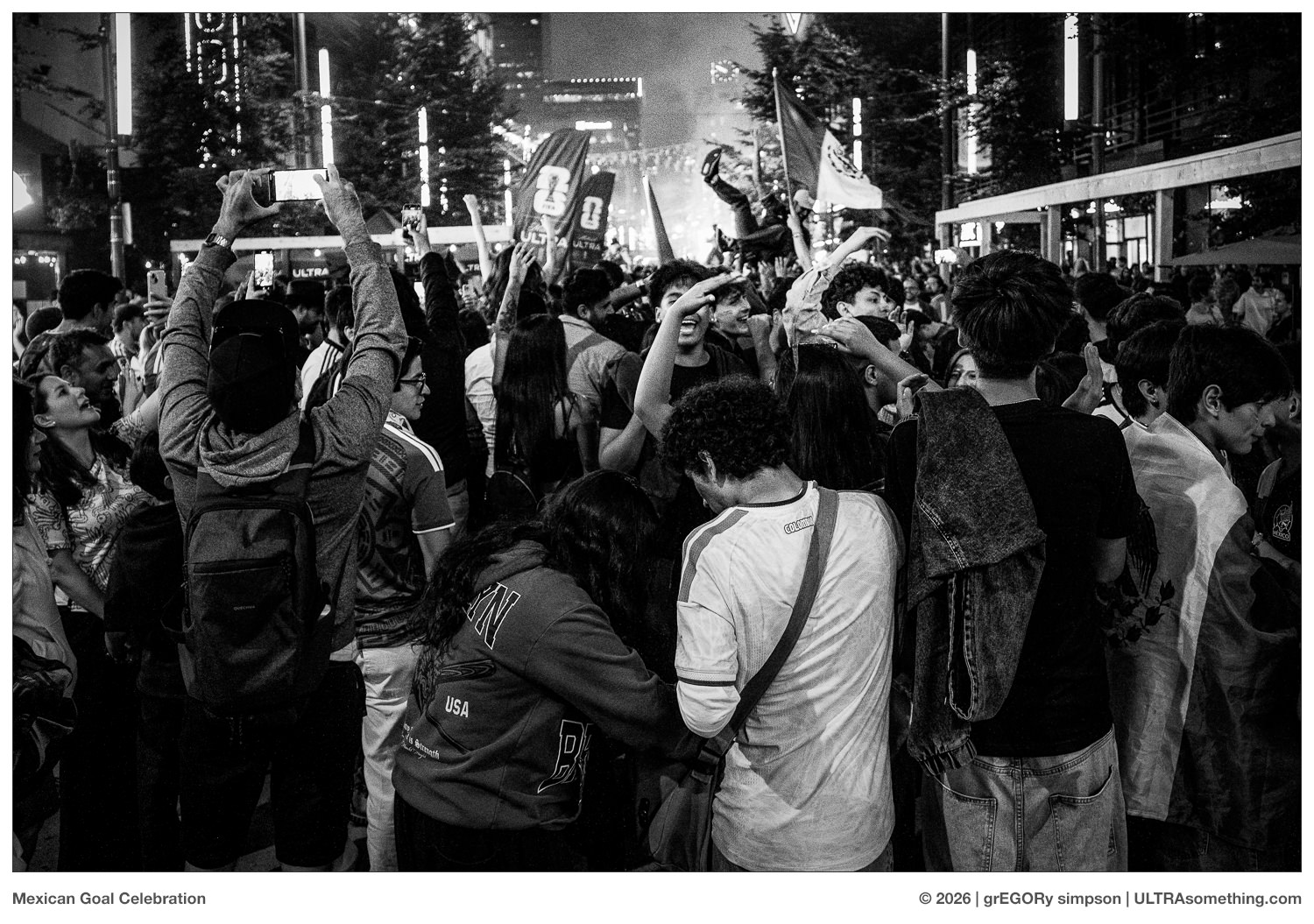
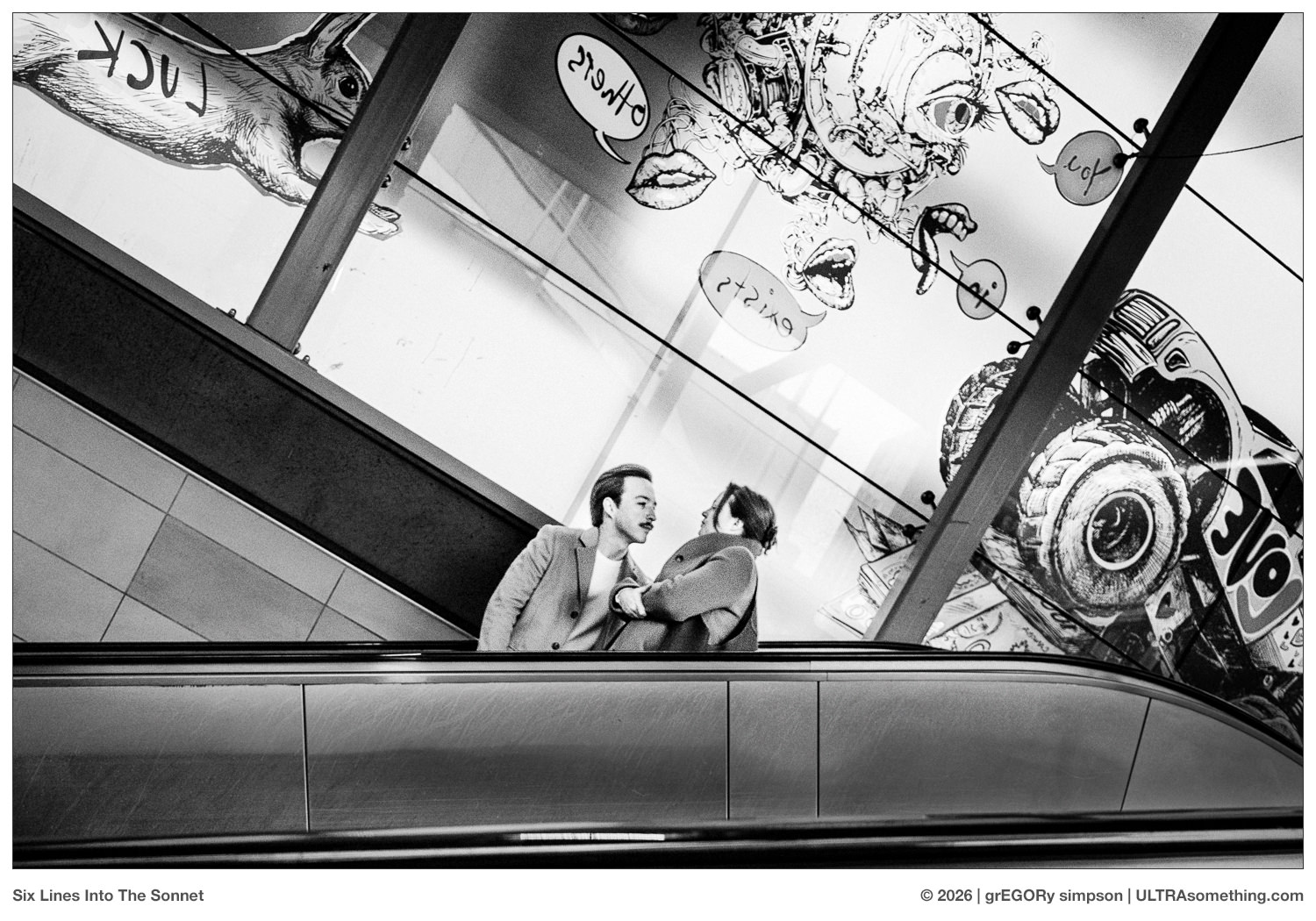
The camera’s image quality is, as you would expect, outstanding. I’ve included only photos taken at night and at high ISO because they’re the sort I believe benefitted the most from the M10 Monochrom’s new sensor.
If you’re looking at these photos and wondering why they don’t exactly showcase all that “image quality” I’m touting, I’ll refer you to the article’s opening paragraph, where I wrote “a photo’s feel will always supersede its fidelity.” When deciding on a camera, the primary dictates are how well the camera handles; how quickly I can get the shot; and how likely it is I can salvage the shot should I not have enough time to achieve proper focus or exposure. It’s the paradox mentioned in the article’s title: the fact I require such a high fidelity machine to succeed as a low-fidelity photographer.

Also, these photos reflect the fact I shoot many types of lenses to convey different moods. Sometimes those moods require a sharp, contrasty lens, and sometimes they require the opposite. So this series features a host of different lenses, including Leica’s 21mm f/3.4 Super-Elmar-M ASPH, 28mm f/2 Summicron-M ASPH, and an old 1980’s Canadian 35mm f/2 Summicron. Also represented are a Voigtlander 50mm f/1.5 Nokton ASPH, and a Minolta-M Rokkor 28mm f/2.8. How a camera deals with vintage and third-party optics is every bit as important to me as how it deals with the latest tech from Wetzler.

REMINDER: If you find these photos enjoyable or the articles beneficial, please consider making a DONATION to this site’s continuing evolution. As you’ve likely realized, ULTRAsomething is not an aggregator site — serious time and effort go into developing the original content contained within these virtual walls.