With the introduction of the Kodak DCS100 in 1991, I first realized digital photography might one day become “a thing.” Sure, it was a $20,000 chunk of ponderous 1.3 megapixel lab gear that you lugged around on your shoulder and tethered to a Nikon F3. And no, I was no more likely to ever own this than the Lotus Esprit I’d wanted since High School. But it pointed toward the future — a future without the wicked 3-day migraines I would endure after every printing session spent holed up in a sweaty, unventilated, makeshift darkroom with open trays of chemicals. In 1991, I made a wish: that I would one day own a digital camera capable of replacing my 35mm film camera.
Sadly, the migraines meant I couldn’t just sit idly by, year-after-year, waiting for the technology to mature. The most obvious solution was to simply let a lab print my film — but I detested the way lab prints looked and the lack of control I had over the final image. That’s why I invested in darkroom gear in the first place. So I began with the idea of “photographing” on video tape and digitizing frame grabs, which I’d process using Silicon Beach’s “Digital Darkroom” and Adobe’s new toy, “Photoshop.” Digital Darkroom was my preferred platform since it was purely a greyscale program, and I had little interest in colour. The tiny, digitized, freeze frame video results were, not surprisingly, awful.
Fortunately, in 1993, Nikon released their very first Coolscan film scanner. While exorbitantly expensive, it was an order of magnitude cheaper than the nascent digital cameras teasing the high-end journalism market. So I bit the bullet and bought one. Using it was a nightmare. Satan himself couldn’t have designed a more frustrating product. Crippled by its reliance on that God-awful computer connection known as SCSI and its persnickety tendency to disconnect mid-scan, it would often take 4 hours or more for me to get a single image from a single negative. It was harrowing. Clearly, this prevented me from scanning more than a few frames per 36-exposure roll, so I would painstakingly analyze and scrutinize each B&W negative with a loupe to try and decide which were worth the agony of SCSI Hell. I had divested myself of my enlarger, so making contact sheets (which would have been infinitely easier to assess) was no longer possible. Unfortunately, I proved quite incompetent at judging which negatives were worth scanning, so I switched to shooting colour slide film. The slides could be assessed easily for scan-worthiness, though I abhorred working in colour; bemoaned the film’s limited exposure latitude; and grumbled profusely at having to actually have a lab develop the film. But the scans, once arduously achieved, looked great! So I made do for another couple years, grudgingly shooting colour slide film and scanning it, until the first affordable digital cameras finally hit the market.
The first to grace my door was the Apple Quicktake in 1995, whose 0.4 megapixel sensor contained 0.2 megapixels of image data plus 0.2 megapixels of random spurious brightly coloured dots. More toy than tool, I spent another couple years scanning negatives until the Kodak DC120 arrived, with its glorious 1.2 megapixel sensor. Sure, its images still had 0.2 megapixels of random hideousness, but that was now offset by a million pixels of splotchy, oddly-hued, actual image data. It was the first digital camera I used with the intent of printing images, though I usually stuck close to the ‘surreal’ and leaned heavily into the image artifacts, since there was no getting around their existence.
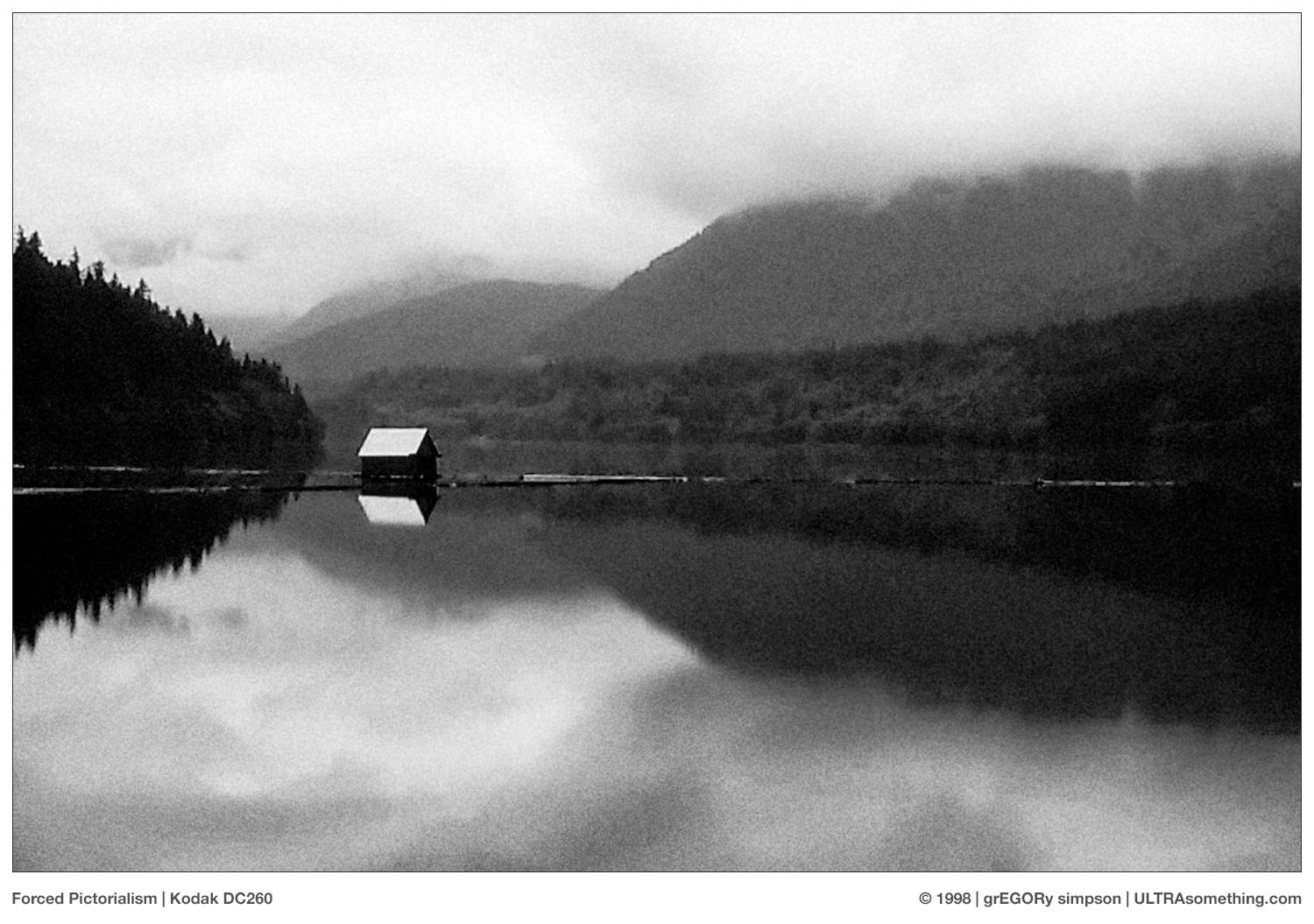
From there I moved through several more digital cameras, including the Kodak DC260 in 1998 (an image from which appears at the top of this post) and, most significantly, the 4 megapixel Olympus E-10 in the fall of 2000. By this point, scanning film was still a laborious chore, but with enough time and patience, I could digitize an entire roll and had thus returned to shooting B&W film. I could have soldiered on with this hybrid technique, but I decided nine years was a long enough wait. And so, in spite of its many flaws, I sold all my film cameras and started shooting digital exclusively — thus ushering in the era in which I produced the fewest photos ever.
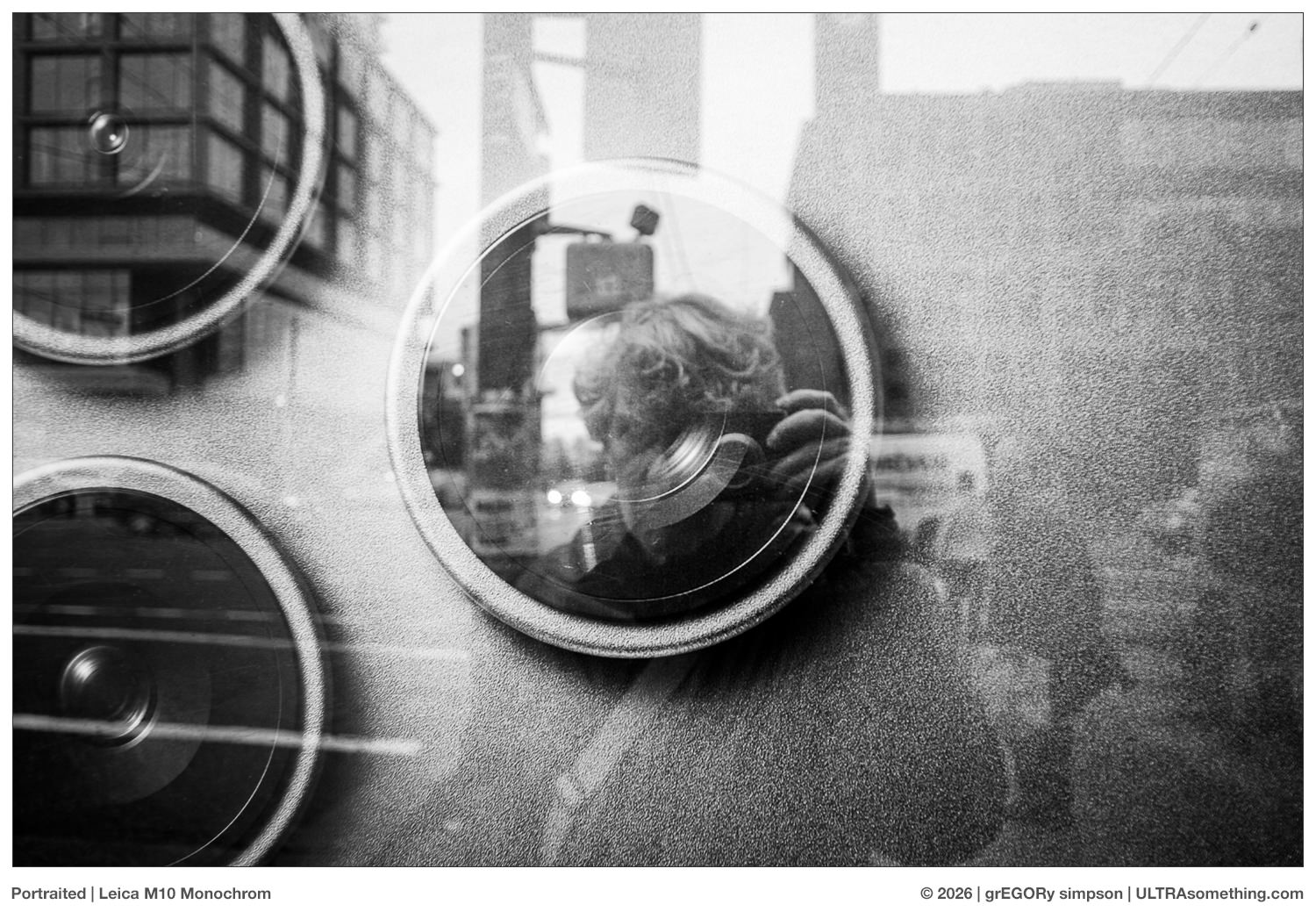
There would be several more cameras over the next couple of years — each leaps and bounds closer to achieving my wish for a camera to pull me from my film-less doldrums… until, in 2004, I purchased a Canon EOS 20D. It was the first digital camera with which I could see the forest through the trees — and it was here that I first realized I was in an entirely different forest. The fidelity was now such that I could plainly discern what digital was truly capable of, and that digital would never look like film. Instead, it would always look like digital — and it was a look I didn’t much care for.
For thirteen years, I’d been on a linear march toward digital — one step after another, always assuming the path would end in the replacement for film. And for most people around the world, this is precisely the time at which this happened. But it had the opposite effect on me. It hastened my return to shooting film and a realization that the only way I would ever get a satisfying film look was to actually go back to shooting it. Digitizing film had now become as painless as my dentist claims to be, and with my aesthetic and creative needs once again satisfied, I began to follow the digital evolution from a position of curiosity, rather than need. So, in the mid 200x’s, my digital and film lives finally settled into a peaceful coexistence. Neither was a replacement for the other. They were simply different, like an oil painting is different than a watercolour.
The next decade was a wild one for digital photography — each new iteration of cameras brought massive “improvements” to the previous iteration, and an even greater gap between my own photographic aesthetic and the world’s at large. I stopped chasing ‘the next model,’ and my digital efforts settled into a 3-camera workflow, which continues to this day: The Leica M; the Ricoh GR; and Micro Four-Thirds.
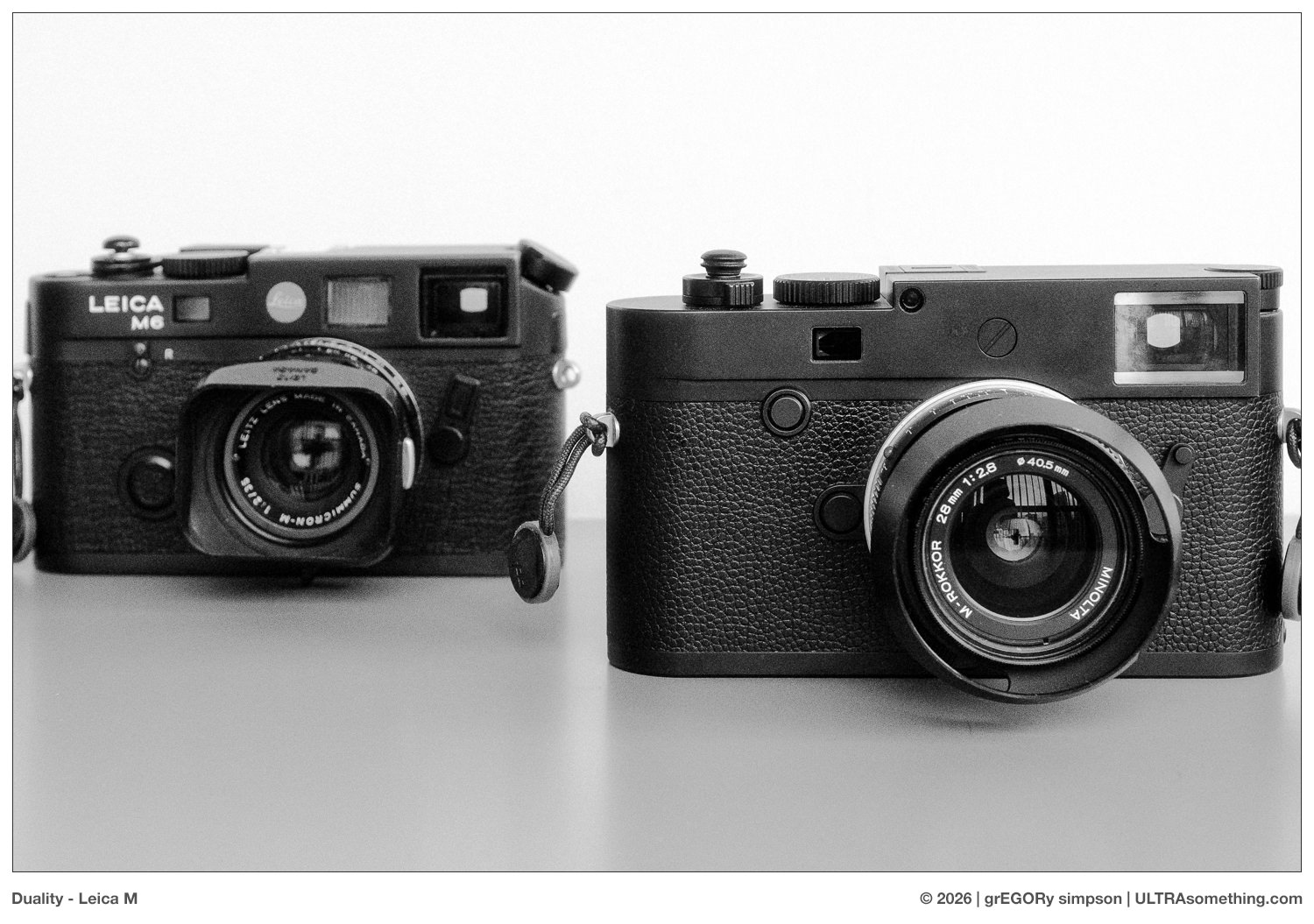
The Leica M decision happened because my photography had long ago shifted into a direction in which rangefinder cameras, far more than SLRs, satisfied my particular needs. For many years, the industry believed the format’s short flange distance made it impossible to ever make a digital version — until Epson did exactly this in 2004. Spurred into action, Leica released the digital M8 in 2006, and digital M’s have been part of my setup ever since. Though a bit financially burdensome, the fact I frequently shoot old Leica M film bodies means the lenses are shared across both disciplines, reducing cost and complexity.
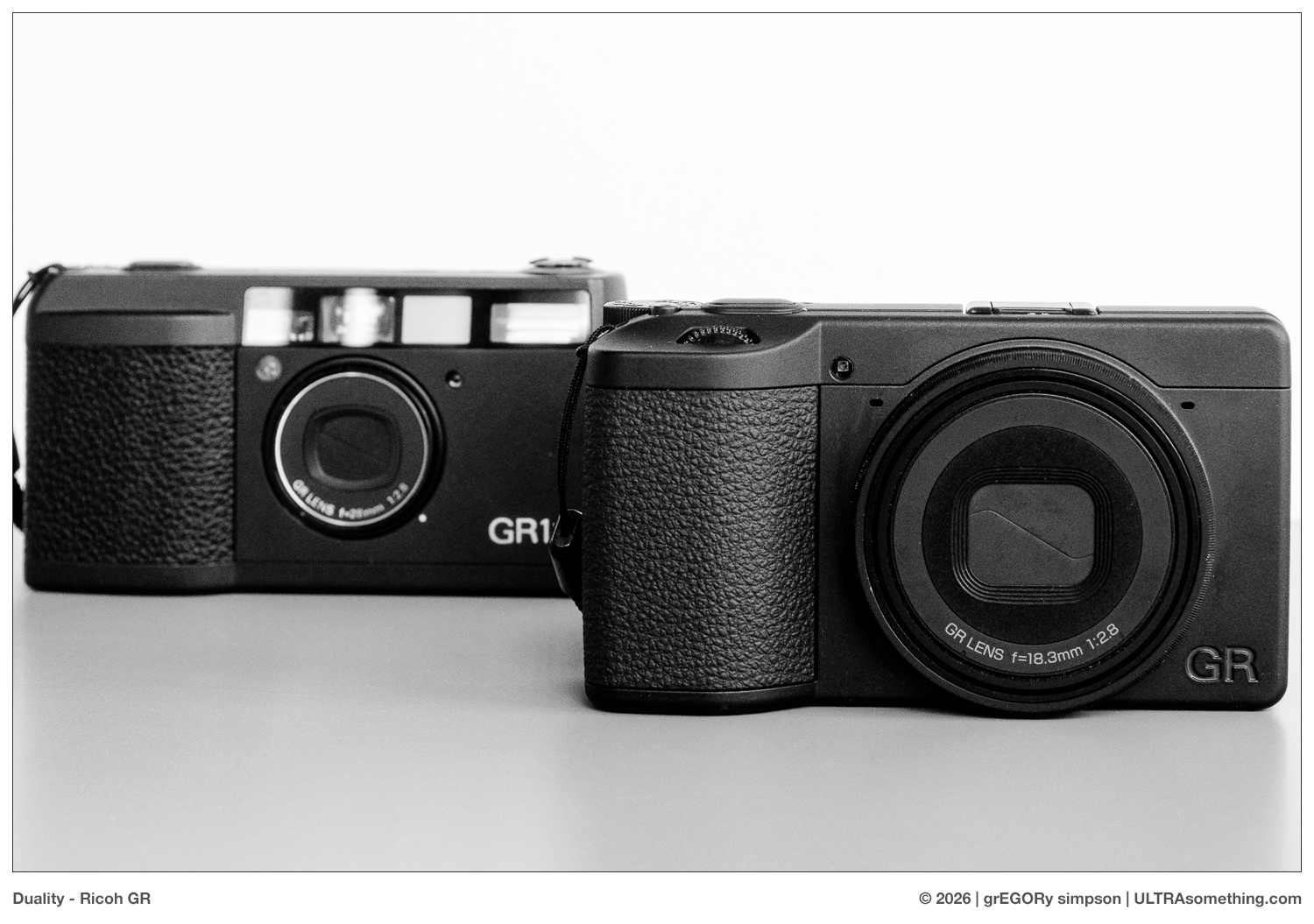
The Ricoh GR joined my happy family because, while rangefinders were my camera of choice for “serious” work, I never left the house without tossing a high-end compact in my pocket. Because of this, I’ve taken as many (if not more) good photos with a compact camera (either film or digital) as I have with my rangefinders. I’ve been shooting Ricoh GR cameras for eons. This includes not only all the modern GR digital cameras but earlier ones (including the marvelous Ricoh GXR series from 2009, which is the only camera system I still regret selling). And right now, over in analog land, my Ricoh GR1v is, by far, my most used film camera.
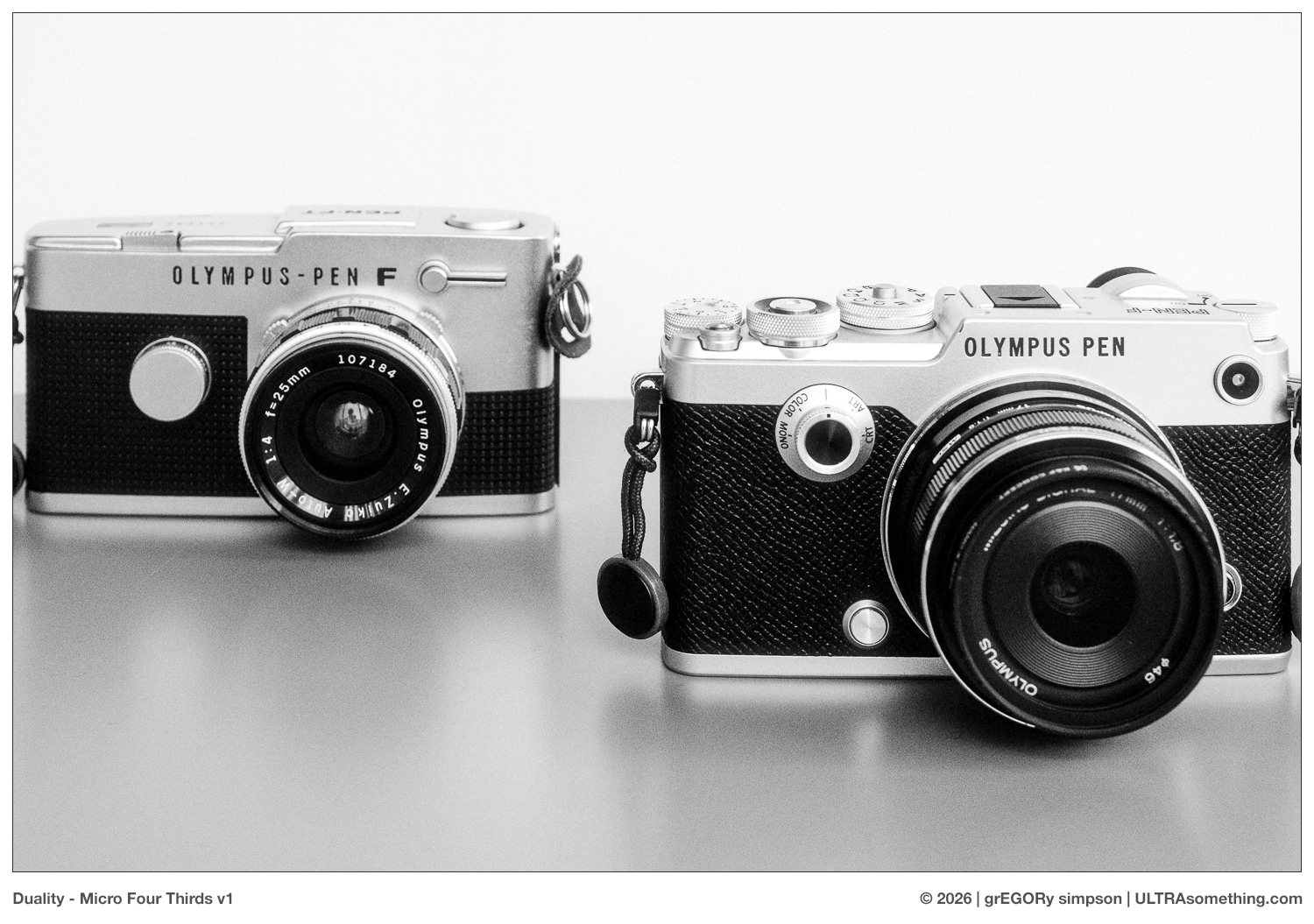
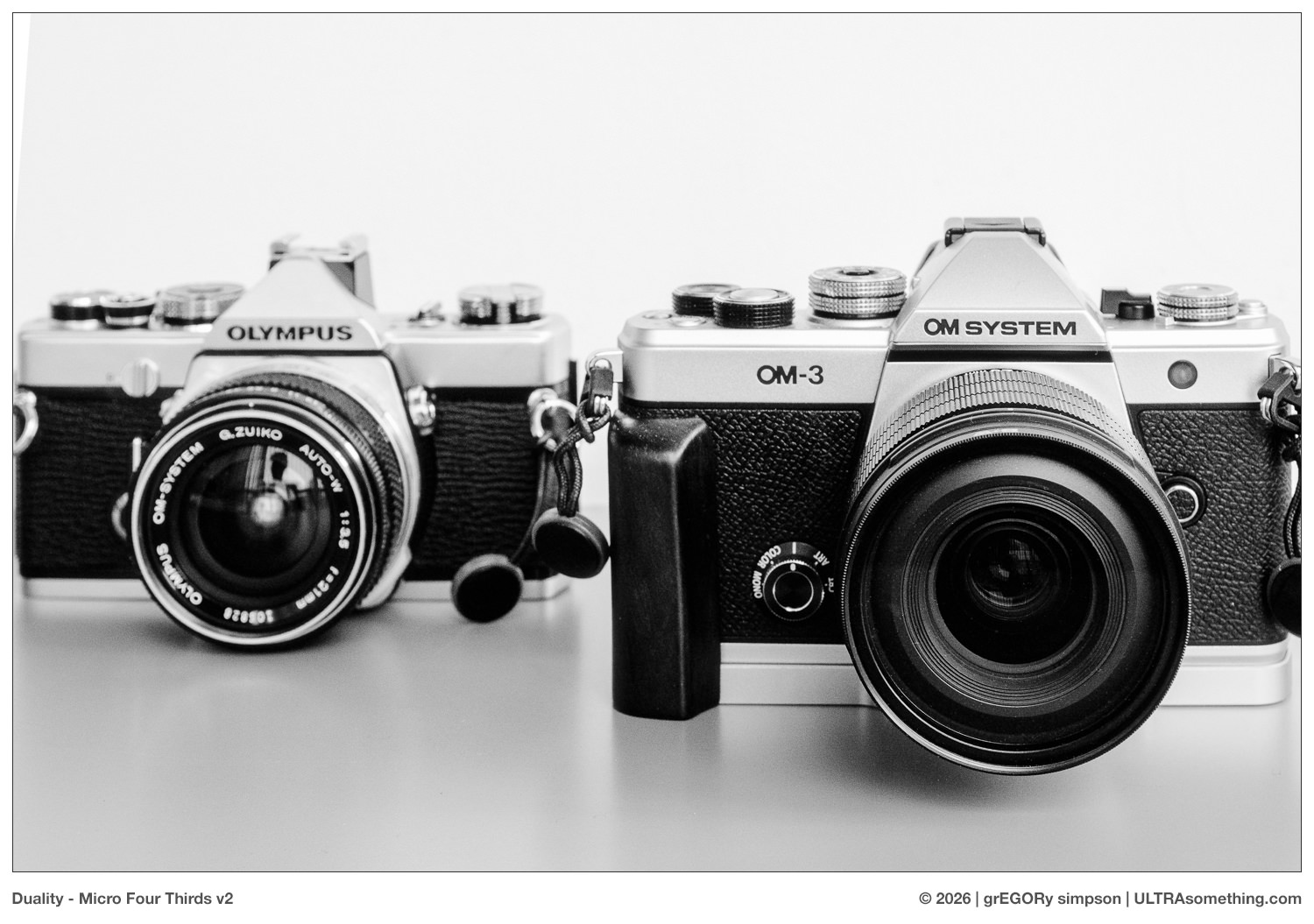
Micro Four-Thirds entered my life in the fall of 2008, with the release of the system’s very first camera: The Lumix DMC-G1. Since then, there’s never not been a micro four-thirds camera or two (or three) in my collection. Everything I initially loved about Micro Four-Thirds back then, I love even more today. That’s because the system has basically stalled technologically — which I consider to be a tremendous benefit aesthetically, since each new generation of digital cameras rendered images that looked less like what I desire and more like computer animation. It’s obviously a look everyone loves (and continues to love now that Ai imaging is more popular than photography ever was), but it’s not something I ever wish to own. So for me, Micro Four-Thirds remains one of the only digital system formats that has character (or, at least, a character I like). Though it would be erroneous to call its look ‘organic’ (it’s digital after all), it produces artifacts that I find pleasing to the eye. It’s a bit like early digital synthesizers, which sound good precisely because of the digital artifacts caused by such things as aliasing and low bit rates. The brain actually LIKES noise, so as long as the noise remains random (as it does with Micro Four-Thirds cameras), the eye is happy.
Having thus settled into a film/digital cooperative lifestyle, I decided I had a new problem to tackle: Colour. My film cameras were now happily running a thousand feet of B&W film through them every year, but my digital cameras were still stuck shooting in colour — forcing me to continue dealing with its elimination and with the image degradation caused by all the crap needed to produce it. Sensors, of course, “see” only luminance values. Colour must be derived and approximated through a series of red, green, and blue filters placed over the sensor, which creates a mosaic’d image from which sophisticated software algorithms ‘calculate’ their effect on luminance and use this to interpolate a probable colour. So why, I surmised, not just make a camera with only a luminosity sensor? In other words, why not just make a black & white camera? It seemed painfully obvious that one could achieve a much more accurate image if one just got rid of the artificial colour hocus-pocus, ripped out the filters, and used only actual luminance (greyscale) values to form the image.
So, at some point around 2008 I started spamming every camera company on the planet with unsolicited requests for a monochrome camera. To anyone in any photography circle who would listen, I would say “why doesn’t anyone make a black & white digital camera?” It was a question roundly dismissed as ridiculous by anyone to whom I offered it. So imagine my surprise and delight when Leica released the first viable black & white digital camera (The Leica M Monochrom) in 2012. The day this camera arrived at my door was the day I finally knew the ultimate path for digital was not to replace my film camera, but to create an entirely new and different way for me to take entirely new and different B&W photos. I thought all the other companies would follow suit, and for the first time since 1993, I’d be able to consider a digital workflow without any need for a colour component. This seemed like a particularly obvious choice for the Ricoh GR series, since the niche into which it slots practically demands the photos be B&W. Unfortunately, for the next 11 years only Leica dared release a B&W digital camera. It wasn’t until 2023 that Pentax snuck a monochrome sensor into the K-3, becoming the only other company to do so. This gave me great hope, since Pentax is owned by Ricoh. Could a GR Monochrom finally appear?
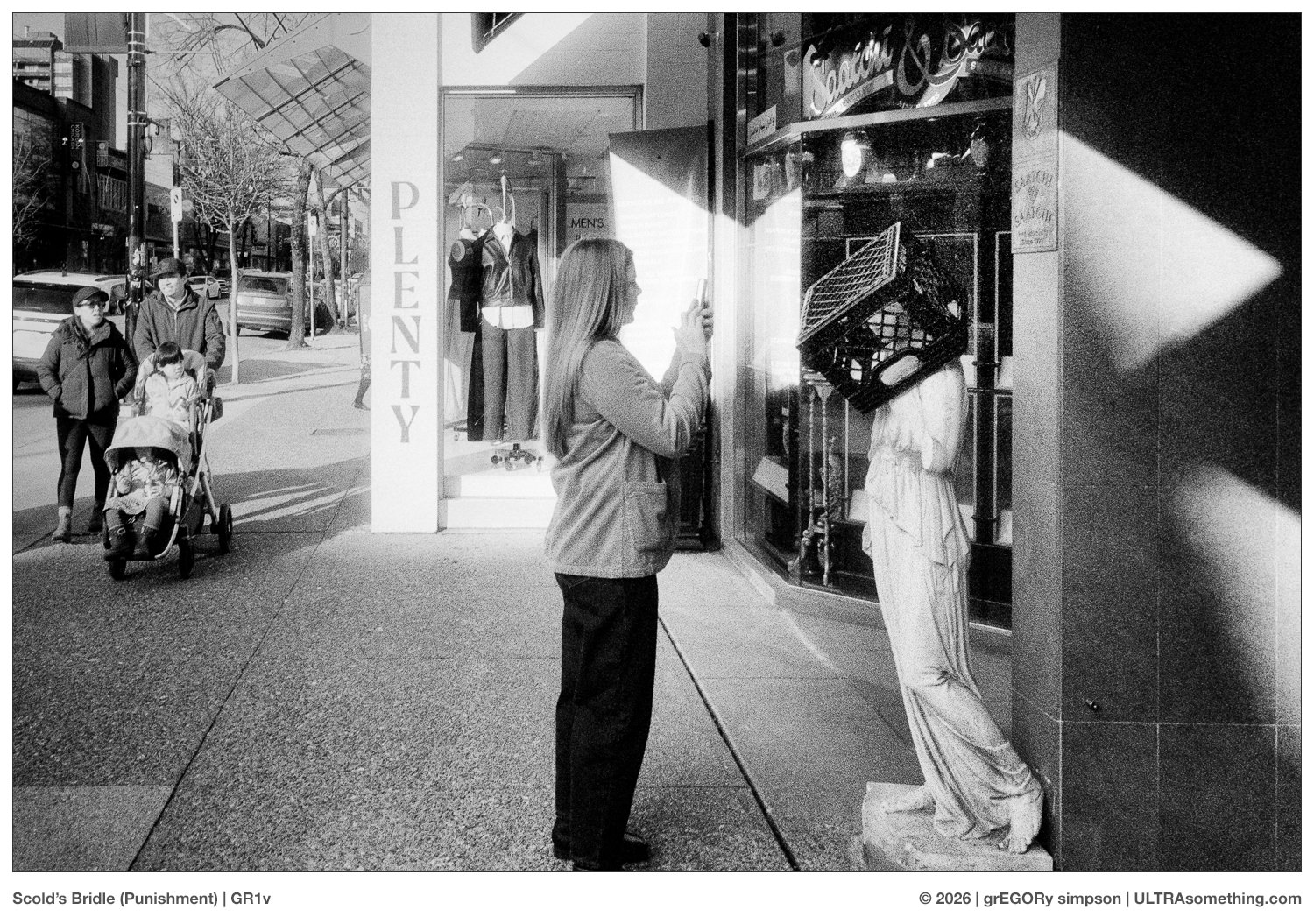
Sitting next to me, as I type this, is the brand new Ricoh GR IV Monochrome — a camera I’ve waited 14 years for. I’m not a big fan of writing camera reviews, but perhaps I’ll file a few reports once I’ve put some miles on it. Needless to say, you can expect a smattering of Ricoh GR IV images to start hitting this site over the next several months.
So where am I, some 35 years removed from my initial wish for a digital camera capable of replacing 35mm film? Clearly, this did not happen, though the impetus for this wish — to make photographic prints without inducing migraines — was achieved decades ago. Still, much like I continue to feel cheated that the jetpacks predicted in my youth did not come to fruition, I feel let down that I never really got my digital camera wish.
Obviously, and for many hundreds of very good reasons, digital photography absolutely evolved into an industry-wide replacement for film. But it ultimately failed to achieve the one thing that mattered most to me: the “look.” Those things I most like about (B&W) film are still absent from digital images. Digital sensors have a linear response to light, insanely high resolution, and are now essentially noise free. B&W film has a very non-linear response to light and a strong grain structure that robs it of resolution but imparts an organic quality that I find immensely appealing. These attributes cannot be ‘simulated’ with software because they need to occur at the ‘capture’ stage and not at the ‘processing’ stage. If a digital camera has any hope of ‘replacing’ film in my life, it’s going to need a sensor with organically shaped, randomly scattered, grain-like pixels that have a non-linear response to light. So can someone get to work on this, please? After 35+ years of failed promise, is that really too much to wish for?
©2026 grEGORy simpson
REMINDER : If you’ve managed to extract a modicum of enjoyment from the plethora of material contained on this site, please consider making a DONATION to its continuing evolution. As you’ve likely realized, ULTRAsomething is neither an aggregator site nor is it AI-generated. Serious time and effort go into developing the original content contained within these virtual walls — even the silly stuff. Those who enjoy a tactile engagement with photographs are encouraged to visit the ULTRAsomething STORE, where actual objects, including ULTRAsomething Magazine and the So Far So So anthology book are available for purchase.
COMMENTS : Comments will be moderated before they’re posted to the website, and commenting will be disabled on any article more than 6 months old.